|
|
 |
|
|
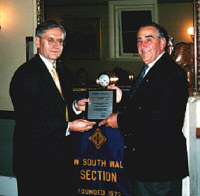
In presenting the
seven awards, Dr Bird made the following remarks. “I mentioned in my
historical introduction that the Section has had many dedicated servants over
the years. On the present occasion, the Section Committee resolved to honour
Section members who have served continuously for ten years or more on the
Section Committee. This evening 7 awards will be given. Bruce Poon Has served on the Committee since 1992 and has been the Membership officer since 1995. He has been active in promoting IEEE at year 11 and 12 careers day activities since 1996. Sam Reisenfeld Chair of the
Communications & Signal Processing Chapter, instigator of the highly
successful Globecom 98 conference in Sydney and member of the conference
Technical Program Committee. Ramutis
Zakarevicius Zak has served more
or less continuously on the Committee since the mid 1970s. He was Section
Chairman from 1979 to 1981. Up until this year he was the Committee member
responsible for Educational Activities. John Robinson John has held most
executive positions on the Section Committee, including Chairman in 1999-2000,
Secretary in 1998 and Treasurer from 1990 to 1998. Walter Lachs Walter was Chairman
in 1988 to 1990 and again in 1995. He was Chairman of Australia Council from
1990 to 1991. He has served as Vice Chair in 1998 and Secretary from 1991 to
1993 and also 1996 to 1997. I believe he was Editor of the newsletter Circuit
for over 10 years. Demetrios (Jim)
Logothetis Jim has served in
total 7 years as Chairman, from 1991 to 1994 and again from 1996 to 1998. He was
secretary from 1987 to 1990, in 1995 and again in 1999. Most recently, Jim has
been responsible for Professional Activities, which includes IEEE’s
involvement in Engineering Week. James Vasseleu Jim Vasseleu is the Father of
the Section. He has served almost continuously on the Committee since its
inception, except for when he was Region 10 Director in 1977 and 1978 and member
of the IEEE Board. He was Chairman in 1972 to 1973 and again from 1985 to 1987.
He has held several other positions including Vice Chair from 1995 to 1997, and
Treasurer from 1974 to 1975. For a number of years he has been Chair of the
Nominations Committee, the Awards Committee and the Life Member Committee. Please give a round of applause for these most distinguished members of the New South Wales Section Committee!”
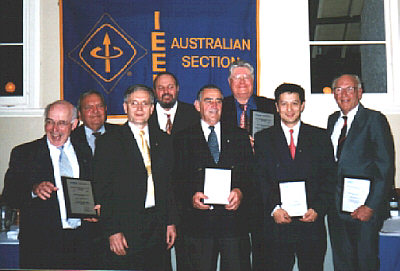
Recipients of 10-year awards and the Section Chairman in front of the original banner of the Australian Section which ultimately became the NSW Section. Left to right: John Robinson, Jim Logothetis, Trevor Bird (Chairman), Sam Reisenfeld, Jim Vasseleu, Ramutis Zakarevicius, Bruce Poon and Walter Lachs.
4. VALE DR PETER SOMLO
As well, he was a Member of the Editorial Review Board of IEEE Transactions on Microwave Theory & Techniques from 1970 to 1993, and Secretary/Treasurer of the Antennas & Propagation – Microwave Theory & Techniques NSW Chapter in 1992. Peter was born in Budapest, Hungary, and obtained the Dipl. Ing
degree in 1956 from the University of Technology, Budapest. After arriving in
Australia, Peter was employed by the CSIRO National Measurement Laboratory,
Sydney, where he remained until 1993. In the latter years at CSIRO he was Leader
of the RF/Microwave Group and a Senior Principal Research Scientist.
5. NSW SECTION WEB NEWSWEBMASTER The NSW Section Web Master is Jon Paul Agnew. Chapter Committee members should contact Jon Paul to update the details on the web site. Don’t forget to place the web address https://ewh.ieee.org/r10/nsw in your Bookmarks so as to keep up to date with the latest Section news and information. KEEP UP TO DATE
WITH DOCUMENTS AND NEWS ON THE SECTION WEB SITE
Visit the ‘News’ section for updates
to the lecture programs on the NSW Section web site.
REGISTER FOR A PERSONAL EMAIL ALIAS “name@ieee.org” Many IEEE members do not realise that the IEEE offers an Alias service with free Virus Scanning. IEEE members can register or update a personal alias of their choice (subject to availability), which will forward email to their real Internet email address. This overcomes the need to notify the IEEE (or the Section) if you change your home email address. To obtain an email alias go to the IEEE website (www.ieee.org), click on “Web Account” and follow the directions. In 2001 IEEE's Email Alias service with virus scanning stopped 158,126 viruses from being delivered to members. This is more than six times the 24,000 infected messages stopped in 2000. This free benefit offered to IEEE members is one of many advantages of an IEEE Email Alias. To continue to have access to this service, members in Region 10 must have renewed their membership by the end of April. To find out more about the IEEE Email Alias, visit https://eleccomm.ieee.org/personal-aliases.shtml.
6. NSW HUNTER VALLEY SUB-SECTION CLOSESThe NSW Section Committee has recommended to IEEE Headquarters that the NSW Hunter Valley Sub-section be delisted. This follows a request for expressions of interest in the last issue of CIRCUIT to form a local organising committee. The response was very disappointing both for the Section Committee and some members in the Hunter. However, there was insufficient interest to form a committee and restart activities that would ensure the viability of the Sub-section in the future.
|
| DATE | SUBJECT | SPEAKER | SPONSOR |
| 14 Nov 2002 | Strategic Asset Management | Dr Platfoot | |
| 28 Nov 2002 | The Expanding Scope of Professional Liability – IEAust. Elec. Branch AGM | Jörn Schimmelfeder, Pricewaterhouse- Coopers | IEAust |
| 29 Nov 2002 | IEEE AGM | IEEE | |
| 13 Feb 2003 | Protection against arcing faults on LV switchboards. | TBA, Uni. Syd. | IEAust |
| 27 Feb 2003 | Power line communications | R Watts, InovaTech | IEAust |
| 13 Mar 2003 | Intensive care by wire-telemedicine | Dr L Wilson, CSIRO Telecom. & Ind. Phy. | IEE |
| 27 Mar 2003 | JPEG2000 - a new image compression standard | Dr David Taubman, UNSW | IEEE |
| 10 Apr 2003 | Callide C power station | Philip Neal | IEAust |
| 8 May 2003 | New developments in railway signalling | SRA | IEAust |
| 22 May 2003 | Gamma camera for detecting landmines | Dr J Tickner, CSIRO Minerals | IEE |
| 12 Jun 2003 | E-liability | TBA | IEE |
| 26 Jun 2003 | Transformers for the modern world | Colin James, ALSTOM | IEAust |
| 10 Jul 2003 | Update on Bluetooth | TBA | ITEE |
| 24 Jul 2003 | Truscan-a scanning probe for cancer in women | Polartechnics | IEE |
| 14 Aug 2003 | Electromagnetic Engineering in the world of photonic crystals | Drs Andrew Weily & Karu Esselle, MacQ. Uni | IEEE |
| 28 Aug 2003 | Intelligent Networked Home | Dr Peter Beadle, Motorola | IEEE |
| 11 Sep 2003 | Electronics in the medical industry | Siemens or GE | IEE |
| 25 Sep 2003 | Process control systems in the printing industry | Fairfax | IEE |
| 9 Oct 2003 | Protection against terrorism | Eric Parker | ITEE |
| 23 Oct 2003 | Space Time Signal Processing | Dr Petrag Rapajic, UNSW | IEEE |
| 13 Nov 2003 | Update on contestability of LV power distribution | TBA | IEAust |
| 27 Nov 2003 | Board Band Optical Fibre Sources | Assoc Prof Graham Town, MacQ. Uni | IEEE |
| 28 Nov 2003 | IEEE Annual General Meeting | IEEE |

STRATEGIC ASSET MANAGEMENT
Speaker:
Dr
Bob Platfoot, Covaris Pty Ltd
Synopsis: This paper presents various methodologies and issues associated with a total asset management process that embraces the use of capital and maintenance expenditure to ensure assets meet the full spectrum of operational requirements, including safety, performance and return on investment. Pervading the entire process is a risk management process that is a function of the condition of the asset base and the responsiveness to identified needs. The tangibles of the asset management plan are physical documents and systems that make up the individual elements within the framework. In this case, they are the outward signs of a business process, which is comprised of many business rules.
Output from the asset management plan described in the paper includes distribution of costs across systems and areas, efficiency of the
expenditure (including reactive versus proactive maintenance plus
anecdotal notes on known problems), and effectiveness of the expenditure –
management of the reliability and capability of the systems, where capability
represents ability of an asset to provide its intended function with expected
levels of flexibility, efficiency and quality.
In conclusion this work has achieved interpretation of the broad overall
business targets in terms of operational requirements for specific assets and
groups of assets, planning ahead to check likelihood of asset capability being
able to meet operational requirements, and gap analysis between operational
requirements and operational performance.
Biography: Bob Platfoot is a Principal of Covaris Pty Ltd, an
engineering consulting and technology development company based in Sydney,
Australia.
The main focus of the company is divided into four core programs streams:
strategic asset management, maintenance systems, process optimisation and energy
optimisation.
Prior to this, Bob was a Senior Lecturer at the University of NSW
where he extensively researched maintenance engineering methods, and developed
various processes applicable to the shop floor as well as restructuring of
company processes. He was responsible for introducing maintenance course work
and various research projects associated with preventative maintenance systems
and contemporary approaches.
He worked for the Electricity Commission of NSW, now known as
Pacific Power, between 1979 and 1992, covering various aspects of coal fired
boiler plant life assessment and maintenance.
Key work included predicting three dimensional gas flows inside boiler,
dust collection and milling plant, and life assessment of high temperature tube
banks.
He holds BE and PhD degrees in Mechanical Engineering.
THE EXPANDING SCOPE OF
PROFESSIONAL LIABILITY
Speaker:
Jörn Schimmelfeder, Senior Associate – Infrastructure, PricewaterhouseCoopers
Legal (Tel: 61 2 8266 6684)
Synopsis: The scope of professionals' liability is expanding such that each participant involved in a construction project is obliged to act in a manner which may often cause them to accept responsibilities beyond those set out in the terms of their agreement. Legal obligations can be imposed where an engineer should be capable of identifying a potential problem or scope for liability. This duty is often discharged by warning the relevant party, being the superintendent administering the contract or the principal himself or herself. In some circumstances, the duty requires something more to be done. The concerning aspect of this development in the law is that engineers may not know when the duty arises or what, in precise terms, is ! required of them. This is particularly unnerving where engineers may seek to rely on the approved practices of their professional body, such as the Institution of Engineers.
This
development in the law is one reason why consulting professionals need to adopt
a more sophisticated approach to providing their services.
One way to control contractors' claims is to consider these issues when
drafting contracts to engage consultants.
Limitations on, or indemnity from liability where it arises in particular
circumstances are a pre-emptive way of managing the risk which is introduced by
these developments in the law.
Exclusion clauses need to be carefully drafted and raise further issues
for consideration.
Biography:
Jörn Schimmelfeder has a broad range of experience in construction,
infrastructure and engineering transactions and disputes.
He has
been involved in the drafting of long term road and rail maintenance agreements,
joint venture agreements for consortiums undertaking major infrastructure
projects and drafting mining infrastructure agreements as well as major
construction disputes.
Jörn
was identified in the 2001-2002 edition of Legal Profiles as a "Young
Gun". His practice areas are identified as "construction and
maintenance of major infrastructure including project finance and establishing
transaction structures". The client comment is noted as "knowledge of
law, understanding government and rail contracts. Punctual with commercial
responses. Available to answer queries".
PROTECTION AGAINST ARCING FAULTS
ON LV SWITCHBOARDS
Thursday, 13 February 2003
Speaker: TBA
No details provided at time of printing. Please visit the ‘News’ page of the Section web site for details in the weeks preceding the meeting.
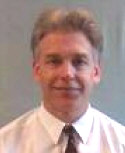 David
Burger is Treasurer of the Section and previously was Assistant Treasurer in
1998 and Vice Chair in 2001. David is a Senior Member of the IEEE and the
IEAust. He also has a Chartered Professional Engineer accreditation, and is a
member of the IEAust Electrical College. As well, he is a member of the IT&C
College of IEAust and is on the panel of interviewers for this College. In his
spare time, David is actively involved in Amateur Radio, holding the
highest-grade licenses in both Australia and the USA.
David
Burger is Treasurer of the Section and previously was Assistant Treasurer in
1998 and Vice Chair in 2001. David is a Senior Member of the IEEE and the
IEAust. He also has a Chartered Professional Engineer accreditation, and is a
member of the IEAust Electrical College. As well, he is a member of the IT&C
College of IEAust and is on the panel of interviewers for this College. In his
spare time, David is actively involved in Amateur Radio, holding the
highest-grade licenses in both Australia and the USA.
David is currently employed with
PricewaterhouseCoopers in the Infocomms consultancy group. His work involves
voice/data and multi-media telecommunications network diagnostic work, telco
operations process improvement and capacity planning and forecasting, including
emerging mobile networks.
The next meeting of the NSW Joint Chapter of Solid State Circuits/Circuits and Systems on 30 October will be addressed by IEEE Fellow Neil Weste, Director of Engineering, Cisco. Neil’s talk is entitled “RF, CMOS and friends – a potpourri of experiences with IEEE 802.11a chipset”. The venue is Cisco Systems, Level 2, 3 Innovation Road, North Ryde, NSW. The meeting is scheduled from 6 to 9 pm and includes refreshments and the opportunity to network.
For
further details please contact the Chapter Chair, Steven Duvall
(ph 9937 5861,
email steven.g.duvall@intel.com)
.
The IEEE Board of Directors voted in June to
increase dues and assessments for the 2003 membership year. The rate for
higher-grade members will increase to US$110 plus Regional Assessments.
Student dues will rise to US$30 for Regions 1-7 and US$25 for Regions
8-10. (A subscription to "IEEE Potentials" magazine is included in
membership for students in Regions 1-7, accounting for the difference.) This is
the first increase in Student dues since 1993, and only the second increase in
higher-grade dues since 1996.
In addition, the Board raised the IEEE-USA assessment to US$33 and revised the reduced-dues program for recent graduates. The now one-year program offers individuals a 50 percent discount off full member dues the first year after graduation.
At a special meeting on 2 August, the IEEE Board of Directors voted to revise the Affiliate fee for 2003 to US$49. The Board also voted to set the Affiliate fee to 50 percent of full IEEE dues for the 2004 membership year and beyond.
After 15 August, the new 2003 dues rates will
go into effect and all applications received at IEEE will be processed for the
2003 dues year. The online 2003 IEEE applications will be available as of 1
September for applicants paying by credit card.
The online applications may be found at https://www.ieee.org,
select the link for "Membership."
IEEE Scoop September 2002
IEEE has launched a new Conference Search function that enables a visitor to go right to the appropriate "shop" page if she wants to purchase a publication associated with her conference (if a publication exists). Start your search at https://www.ieee.org/conferencesearch/.
The
easiest way to find a conference is to select a "Year" and a
"Sponsor," then click on "Submit."
Select the conference from the search results, and then scroll down to
the
"Proceedings/Publications"
cell. If there is a publication for that conference, you will see a number.
Click on it, and you will be directed to the "shop" page.
For further information, contact Patricia Thompson, IEEE Technical
Activities, telephone +1 732 562 3872; p.thompson@ieee.org.
IEEE Scoop September 2002
The 2001 IEEE Annual Report is now available.
To conserve costs and achieve a broad, global distribution, the report
will be primarily accessible online from the IEEE home page, https://www.ieee.org.
Printed copies will be mailed to the IEEE Board of Directors, major
boards and committees, as well as about 4,000 corporate, government and academic
leaders around the world.
Delegates to the 2002 Sections Congress will receive both a printed copy
and a CD-ROM.
For more information, contact Helen Horwitz,
IEEE Corporate Strategy and Communications, at h.horwitz@ieee.org or +1 732 562 6821.
Through its Rapid Response Program, the IEEE
Foundation is able to quickly respond to funding requests under US$5,000 for
projects and activities related to IEEE student and young professional members.
Three such projects - a robotics competition in Chile, a four-day student
workshop in Spain, and student leadership conference in the United States, were
awarded a total of US$10,400 during September 2002.
To learn more about how to apply for a grant from the IEEE Foundation, go
to https://www.ieee.org/organizations/foundation/html/funding.html.
IEEE Scoop October 2002
Details of conferences and other forthcoming international events can be found by visiting the IEEE web site www.ieee.org/conferencesearch/.
The NSW Section is a technical co-sponsor of the First International Conference on
Information Technology and Applications (ICITA 2002), to be held in Bathurst
from 24 to 28 November 2002. Details may be obtained from the Conference web
site https://odysseus.mit.csu.edu.au/icita2002.html
.
The third Biennial Complex
Systems Summer School will be held from 1 to 6 December 2002. Details can be
found at: https://clio.mit.csu.edu.au/rgai/csss2002/.
Entries are now invited for three student paper competitions. Two are provided by the IEEE Australia Council and the third, the Max Simons Prize, by the IEEE NSW Section. The aims, the conditions of entry and the method of submission are the same. These and other details are given below.
Aims: (a) To promote the interest of undergraduate / postgraduate students in writing high quality technical papers in the research areas within the technical areas of IEEE.·(b) To promote the interest in all aspects of electrical, electronics, communications, and Computer engineering inclusive of all areas of IEEE interest.·(c) To promote IEEE membership throughout Australia.
Prizes: For the undergraduate competition, a $500 cash prize is
awarded to the student author of the paper judged to be the best submission.
For the postgraduate competition a cash prize of $500 is also awarded,
together with up to $1000 support for the winner to travel to an IEEE sponsored
Australian or International conference of his/her choice in 2003, provided that
the student presents their paper at that conference. The IEEE Australia
Council/NSW Section reserves the right not to award either prize if it believes
that there is no paper of a suitable status.
Max Simons Prize: The best paper submitted from the New South Wales Section will
be eligible for the Max Simons Prize. This includes $200 cash and a certificate.
Certificates: Each of the Best Paper winners of the two competitions (Undergraduate and Postgraduate) is awarded a Certificate from the IEEE Australia Council. In addition a Certificate of Rank is awarded to each of the first and second runner-up student papers of the two competitions.
Subject of the Paper: The author is free to choose the subject of the paper which, however, must be within the traditional fields of Electrical, Electronic, Communications, and Computer engineering, or within the emerging fields of Information Technology, Bio-medical, and Nano-Technology inclusive of all technical areas covered by the IEEE.
Eligibility: The IEEE Australia Council Student Paper Competition is open to all IEEE Undergraduate and Postgraduate Student Members studying in Australia. Separate undergraduate and postgraduate prizes will be awarded. Papers must be submitted in the first instance to the IEEE Section in which their institution is located if a Section level contest is held. The best and the first runner-up undergraduate and postgraduate papers from each Section will then be sent to the IEEE Australia Council where the final decision will be made. In case where there is no section level contest, the student authors may send their papers directly to the IEEE Australia Council. The papers will be judged on technical merit (50%) and presentation (50%).
Judging Criteria: The papers will be judged on their technical contents, original ideas as well as written presentation. Details of the criteria can be found in the IEEE Australia Council web site:
https://ieee.asn.au/postg_criteria.htm
https://ieee.asn.au/underg_criteria.htm
Paper submission: Papers should be submitted to:
Dr A. J. Parfitt
Secretary, New South Wales Section
CSIRO Telecommunications & Industrial Physics
PO Box 76, Epping
NSW 1710
Email: andrew.parfitt@csiro.au
by
11 November 2002 so that the short-listed papers can be
forwarded to the IEEE Australia Council committee before 30 November 2002.
Paper Format: NSW Section should receive six copies of hardcopy or
a softcopy (pdf file) of the Technical Paper in IEEE standard paper format. The
IEEE Format is available from: www.ieee.org/organizations/society/power/subpages/authors.html
or from other web-sites of IEEE.
Contest Rules: All entries must be accompanied by a certificate from an IEEE Student Branch Counsellor or Faculty Member of the entrant’s home institution, confirming the entrant is an IEEE Student Member and indicating which competition (undergraduate or postgraduate) the student is entering. The entrant’s IEEE Student Membership Number must be stated in the certificate. If the student is in the process of becoming an IEEE student member, then a photocopy of the duly completed application must accompany the manuscript. The paper may report on the entrant’s undergraduate thesis or postgraduate research on a topic in the areas of electrical, electronic engineering, computer science or allied subjects in the fields of interest of the IEEE Technical Societies. The paper must be the student’s own work, and the student should declare this in a cover letter with the submission. The maximum length of the paper is six A4 pages including all text and figures.
Deadline: Six
printed copies or one softcopy (pdf file) of the technical paper in accordance
with the Contest Rules must be received by the NSW IEEE Section no later than 11
November 2002.
In the event of a student failing to submit before this deadline due to a
valid reason (e.g. medical reasons), the student may still submit the package to
the IEEE Australia Council before 30 November 2002.
Further information can be
obtained from Dr Parfitt (details above) or
Dr. W. W. L. Keerthipala
Student Paper Contest Coordinator
IEEE Australia Council
Tel: 61 (08) 9266 7901
Email: rkeerthi@cc.curtin.edu.au
Wanted to purchase. Hardbound copy (1st or 2nd edition) of ‘A treatise on the theory of Bessel functions’, by G.N. Watson. Contact: the Editor (ph 9372 4289, email ts.bird@ieee.org).
As has been foreshadowed for over a year now, from 2003 CIRCUIT will normally be provided electronically by downloading from the NSW Section Web site https://ewh.ieee.org/r10/nsw. Members will be notified by email using the address provided at the membership renewal time when a new issue has been posted on the web site.
In 2003 CIRCUIT will be mailed only to those members requesting a printed copy or those not having an email address. If you require a hard copy of CIRCUIT mailed to you please complete the form below and return to the Editor at the address shown.

YES, I WANT
TO CONTINUE TO RECEIVE CIRCUIT BY MAIL
Name:
Member No.:
Tel (w):
Tel (h):
Fax:
Address:
Postcode:
Post return not later than 10 January 2003 to: Editor of CIRCUIT, IEEE Committee C/- PROFESSIONAL CENTRE OF AUSTRALIA, Private Bag No. 1, DARLINGHURST NSW 2010
EDITOR
| ||||||