|
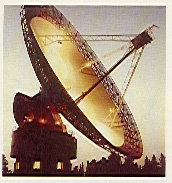
Algonquin Radio Observatory (ARO) is one of two major radio astronomy facilities in Canada where scientists study the sun, stars and distant galaxies in wavelengths beyond those of visible light. ARO is owned by Thoth Technology, a Canadian space and defense company.
Begun in 1959, the observatory is situated deep in Ontario's Algonquin Provincial Park, away from manmade interference. The site contains a collection of instruments designed for research in several phases of radio astronomy, including a giant 46 m dish, built in 1966, to study radio sources far out in space.