


Section News
Section Executive Slate of Candidates for 2018
Dear IEEE NL Section member,
Our Nominations Committee has compiled a list of candidates for the 2018 executive. In accordance with our bylaws (https://ewh.ieee.org/r7/newfoundland_labrador/bylaws.php) members have 14 days to nominate alternate candidates by petition.
The slate of nominees is as follows:
- Chair: Mohamed Shehata (automatic ascension from Vice Chair)
- Vice Chair: Weimin Huang
- Treasurer: Geoff Holden
- Secretary: Dave Green
Any additional nominations can be submitted to Nominations Committee Chair Brian Kidney (bkidney@ieee.org) on or before WEDNESDAY, DECEMBER 27, 2017.
Thanks to those agreeing to serve.
Sincerely,
Brian Kidney
Technical Talk: Prof. François Gagnon on "Low Latency and Highly Secure Protocols for Critical Communications"
IEEE Newfoundland-Labrador Section is pleased to present Professor François Gagnon, the Richard J. Marceau Industrial Research Chair, ETS, speaking on "Low Latency and Highly Secure Protocols for Critical Communications". The event will be held at 3:30 PM on Wednesday, November 2nd, 2016, in room EN-2100 (Suncor Centre Expansion) in the S.J. Carew Building at Memorial University.
Low Latency and Highly Secure Protocols for Critical Communications
As more devices are developed and interconnected, the communication infrastructure becomes critical and time-sensitive for many applications such as drone control, remote surgery and vehicle-to-vehicle communication. These critical communications must be resilient to interference, jamming, intrusions, and are often required to provide services with extremely low latency. The goal our research is to explore various solutions to issues related to this critical communication infrastructure.
The research encompasses several topics spanning the field of digital communications. It centers around two main topics: low-latency communications and traffic analysis, but involves several layers of the communication stack, ranging from the physical layer to the application layer. Standing at the crossroad between two key domains: latency optimization and security in communication networks, the proposed project aims at the ambitious objective of significantly reducing latency in secure communication networks.
This objective is furthermore circumscribed by taking into account the transmission of two coherent message types: short critical messages, and long non-critical messages. The “critical” aspect of said message types herein refers to their latency requirement. A critical message requires lower latency (faster end-to-end transmission) than a non-critical message. A typical critical message relates to signaling and control information for real-time, or near real-time, systems (i.e. remote drone control, utility infrastructure monitoring, telemedicine, etc.).
In order to achieve this global objective, a systemic approach based on the monitoring of network conditions is proposed. Research activities involving the definition, the real-time extraction and the analysis of such network condition metrics are also provisioned in the work-plan. Leveraging network wide metrics with local, i.e. network segment level, performance data will support the deployment of novel secure routing and planning schemes which shall have a significant positive impact on latency
François Gagnon holds a Bachelor of Engineering degree and a Doctorate in Electrical Engineering from the École Polytechnique de Montréal, and has been a professor in the Department of Electrical Engineering at the École de technologie supérieure (ÉTS) since 1991. He served as director of this department from 1999 to 2001.
In addition to holding the Richard J. Marceau Industrial Research Chair, François Gagnon also holds the NSERC-Ultra Electronics Chair in Wireless Emergency and Tactical Communication, the most prestigious industrial chair program in Canada. He also founded the Communications and Microelectronic Integration Laboratory (LACIME) and was its first director, as well as COMunity, a team of very competent, compatible and creative researchers and a set of inspired, senior industry partners.
The author of more than 200 articles papers and owner holder of 8 patents, Professor Gagnon specializes in wireless communications, modulation, coding, microelectronics, signal processing, equalization, software defined radio, mobile communication and fading channels.
Full event details:
- Date: Wednesday, November 2nd, 2016
- Time: 3:30 PM
- Location: EN-2100 (in the Suncor Centre expansion), Engineering Building, Memorial University
IEEE Newfoundland-Labrador Computer, Communication, and Circuits & Systems Joint Societies Chapter Distinguished Lecturer Tour: "BRAINWAY: Cognitive Computer Architecture with Applications in Health Care and Personalized Medicine" by Dr. Andreas G. Andreou
IEEE Newfoundland-Labrador Computer, Communication, and Circuits & Systems Joint Societies Chapter cordially invites you to an IEEE Circuits and Systems Society (CASS) Distinguished Lecture presentation entitled "BRAINWAY: Cognitive Computer Architecture with Applications in Health Care and Personalized Medicine" by Dr. Andreas G. Andreou, IEEE Fellow, Professor in the Department of Electrical and Computer Engineering at John Hopkins University, USA.
BRAINWAY: Cognitive Computer Architecture with Applications in Health Care and Personalized Medicine
Since the invention of the integrated circuit -the chip in short- in the 1950s, the microelectronics industry has seen a remarkable evolution from the centimeter scale devices created by Jack Kilby millimeter scale integrated circuits fabricated by Robert Noyce to today's 8nm feature size MOS transistors. During this time, not only have exponential improvements been made in the scaling of size and the density of devices, but CAD and workstation technologies have advanced at a similar pace enabling the design of complete truly complex Systems On a Chip (SOC). The advances in the microelectronics industry have also enabled the proliferation of computational fields for bio-informatics, systems biology imaging and multi-scale multi-domain modeling. Semiconductor technology is contributing to the advancement of biotechnology, medicine and health care delivery in ways that it was never envisioned; from scientific grade CMOS imagers to silicon photomultiplier and ion sensing arrays. The stunning convergence of semiconductor technology and life science research is transforming the landscape of the pharmaceutical, biotechnology, and healthcare industries, signaling the arrival of personalized and molecular-level imaging diagnosis and treatment therefore speeding up the pace of scientific discovery, and changing the practice and delivery of patient care. Whether through tissue and organ imaging, Labs-on-Chip or genome sequences, biotechnology and modern medical diagnostics are generating a staggering amount of data stored in data centers! However, computing in data centers, the engines behind our insatiable desire for global communication, instant connectedness and interaction comes at an economic and environmental cost. Future projected needs in data centers are data intensive applications in Cognitive Computing Technology (CCT). CCT aims at advancing intelligent software and hardware that can process, analyze, and distill knowledge from vast quantities of text, speech, images and biological data ultimately with and as much nuance and depth of understanding as a human would. To meet the scientific demand for future data-intensive CCT for every day mundane tasks such as searching via images to the uttermost serious health care disease diagnosis in personalized medicine, we urgently need a new cloud computing paradigm and energy efficient i.e. green technologies.
The BRAINWAY project in my lab is aimed at the design of an energy efficient Cognitive Processor Unit (CogPU) that combines Ultra-Low-Voltage (ULV) circuit techniques with brain-inspired chip-multiprocessor network-on-chip (NoC) architecture, fabricated in 3D CMOS technology. The design of the CopPU architecture is based on the recently developed mathematical framework for architecture exploration and optimization, where neurons are abstracted as digital arithmetic logic units and communication processors. We estimate, that such highly energy efficient CogPU inference engine will provide an energy efficiency gain of about ×65 by using ULV techniques and massive parallelism, a gain of about ×10 by relying on its SOC 3D DRAM, and a gain of about ×15 by relying on new memory based Bayesian inference computational structures. This yields an aggregate improvement factor in energy efficiency of about ×10000, roughly four to five orders of magnitude with respect to present day state-of-the-art. The first generation silicon for the BRAINWAY architecture was taped out in the Tezzaron 3D CMOS technology. The returned chips from 3D CMOS logic stack have been tested fully functional.
Andreas G. Andreou is a professor of electrical and computer engineering, computer science and the Whitaker Biomedical Engineering Institute, at Johns Hopkins University. Andreou is the co-founder of the Johns Hopkins University Center for Language and Speech Processing. Research in the Andreou lab is aimed at brain inspired microsystems for sensory information and human language processing. Notable microsystems achievements over the last 25 years, include a contrast sensitive silicon retina, the first CMOS polarization sensitive imager, silicon rods in standard foundry CMOS for single photon detection, hybrid silicon/silicone chip-scale incubator, and a large scale mixed analog/digital associative processor for character recognition. Significant algorithmic research contributions for speech recognition include the vocal tract normalization technique and heteroscedastic linear discriminant analysis, a derivation and generalization of Fisher discriminants in the maximum likelihood framework. In 1996 Andreou was elected as an IEEE Fellow, "for his contribution in energy efficient sensory Microsystems."
Full event details:
- Date: Friday, September 30th, 2016
- Time: 10:00 AM
- Location: Main Engineering Boardroom (EN-4002), Engineering Building, Memorial University
Technical Talk: Michael Greenspan on "3D Object Recognition Techniques and Applications"
IEEE Newfoundland-Labrador Section is pleased to present Professor Michael Greenspan of Queen's University giving a technical talk on "3D Object Recognition Techniques and Applications". The event will be held at 10:00 AM on Thursday, September 22nd, 2016, in the Engineering Boardroom (EN-4002) in the S.J. Carew Building at Memorial University.
3D Object Recognition Techniques and Applications
Once considered exotic, over the past few years, 3D range sensors have become inexpensive consumer items, which has led to an increase in their use in computer vision research. In this talk, I will describe three model-based algorithms for pose determination and object recognition in range data. One is a local method, called Variable-Dimensional Local Shape Descriptors, that automatically selects the best feature properties for a given set of objects, using a training phase. The second is a global method, called Potential Well Space Embedding, that exploits the existence of local minima of the Iterative Closest Point potential well space. The third exploits underlying parametric surfaces in the data to establish Virtual Interest Points. I will also present a number of interesting applications of 3D data that we have pursued in my lab, and conclude with a discussion of future research directions.
Michael Greenspan is a Professor within and Head of the Department of Electrical and Computer Engineering, with a cross-appointment to the School of Computing at Queen's University, Kingston, Canada. His research interests include pose determination, object recognition, and tracking (especially using range data), and robotic gaming systems. Professor Greenspan was the recipient of the Canadian Image Processing and Pattern Recognition 2003 Young Investigators Award, and the Premier’s Research Excellence Award. He spent the past year on sabbatical at Epson Edge in Markham, pursuing research into Augmented Reality systems and 3D Robot Vision.
Full event details:
- Date: Thursday, September 22nd, 2016
- Time: 10:00 AM
- Location: Main Engineering Boardroom (EN-4002), Engineering Building, Memorial University
Dual radar presentations: "Development and results of dual-frequency HF radar for sea surface observations" and "Freshwater sensing with shore-based UHF radar"
IEEE Newfoundland-Labrador Section invites you to attend dual presentations by Dr. Yingwei Tian, Dr. Caijun Wang, and Prof. Shicai Wu from Wuhan University on the topics "Development and results of dual-frequency HF radar for sea surface observations" and "Freshwater sensing with shore-based UHF radar". The talks will be held on Thursday, August 25th 2016 at 2 PM in EN-4002 at Memorial University.
About the speakers:
Yingwei Tian received the B.S. degree in Communication Engineering and PhD degree in Information and Communication Engineering from Wuhan University, Hubei, P.R. China, in 2010 and 2015, respectively. He is a Postdoctoral fellow in the Radar and Signal Processing Laboratory, School of Electronic and Information at Wuhan University.
Caijun Wang received the B.S. degree in Electronic Information Science and Technology, M.S. degree in Circuit and System, and PhD degree in Signal and Information Processing from Wuhan University, Hubei, P.R. China, in 2003, 2005 and 2008, respectively. He is a Lecturer in the School of Electronic and Information at Wuhan University.
Shicai Wu received the B.S. degree in space physics from Wuhan University, Hubei, P.R. China, in 1966. He is a Professor of radio physics at Wuhan University, where he was in charge of developing the HF surface wave radar OSMAR2000. His research interests include radio-wave propagation and radio oceanography.
Full event details:
- Topics: 1. Development and results of dual-frequency HF radar for sea surface observations; 2. Freshwater sensing with shore-based UHF radar
- Speakers: Drs. Yingwei Tian, Caijun Wang, Shicai Wu
- Date: Thursday, August 25, 2016
- Time: 2:00 PM
- Location: Main Engineering Boardroom (EN-4002), Engineering Building, Memorial University
IEEE Newfoundland-Labrador Computer, Communication, and Circuits & Systems Joint Societies Chapter Distinguished Lecturer Tour: Dr. Jie Chen on "Developing pulsed wave instruments for renewable biofuel and therapeutic applications"
IEEE Newfoundland-Labrador Computer, Communication, and Circuits & Systems Joint Societies Chapter cordially invites you to an IEEE Circuits and Systems Society (CASS) Distinguished Lecture presentation entitled "Developing pulsed wave instruments for renewable biofuel and therapeutic applications" by Dr. Jie Chen, IEEE Fellow, Professor in the Faculty of Engineering at the University of Alberta, Canada. The event will be held on Friday, July 29th, 2016 at 11:30 AM in EN-4002 in the Engineering Building at Memorial University.
Developing pulsed wave instruments for renewable biofuel and therapeutic applications
The world is actively looking for cost-efficient renewable energy sources. The U.S. Department of Energy and Agriculture projects that lignocellulosic based material will be an alternative renewable energy source because lignocellulose can be sourced from a variety of unutilized feedstock. Most current research focuses on biological or chemical screening for optimal strains and adjusting culture conditions / culture media. The lecturer has investigated a novel form of mechanical stimulation, in particular, pulsed wave technology with 1.5MHz frequency and 20% duty cycle. He will present the circuit and low-power chip design of the pulsed wave device. He will also describe the design of a close-proximity thermoacoustic sensor for detecting wave intensity. Experiments using shaker flasks show that the pulsed wave technology can increase bio-ethanol production by up to 60%. The pulsed wave technology can also increase bio-diesel production from microalgae by up to 25% in fermentation bioreactors. He will present the mechanism that allows the pulsed-wave technology to increase biofuel production at both the cellular and the molecular levels.
The lecturer will also show that the pulsed-wave technology can help dental tissue formation. The device has passed Clinical Phase I studies and Clinical Phase II trials, and is available on markets for purchase. Reader’s Digest Magazine reported his work and listed it as one of the major medical breakthroughs in Canada. A U.S. Patent “Ultrasound Stimulation Devices and Techniques” was granted in Nov. 2011. Modified devices have shown efficacy in other types of tissue engineering and cell therapy, such as, alleviating mental health diseases (such as Depression, Alzheimer), repairing human meniscus, increasing the proliferation of hematopoietic stem cells by up to 100% after four days of treatments. This finding can help better treat leukemia. Other applications include: increasing the production of monoclonal antibodies (mAbs) by 60% in anti-CD4 mAb production using hybridoma cells (GK1.5 cells from ATCC), and by 25% in anti-IL-8 mAb production using Chinese hamster ovary (CHO) cells, respectively.
Dr. Jie Chen received his Ph.D. degree from the University of Maryland, USA. He is currently a Professor in the Faculty of Engineering at the University of Alberta. He is also a research officer at National Research Council / National Institute for Nanotechology (NINT). Dr. Chen is IEEE Fellow. He is also a Fellow of the Engineering Institute of Canada. He received the Killam and McCalla Professorship Awards for his outstanding contributions to research, teaching and community service. He has coauthored two books, 160 peer-reviewed journal papers, and conference proceeding papers. They were published in high impact journals, such as Physical Review Letter and Small. According to the Google Scholar, his i10-index is 56. Dr. Chen has received numerous awards such as (i) IEEE Distinguished Lecturer Award; (ii) Best student paper award at IEEE/National Institutes for Health (NIH) 2007 Life Science Systems & Applications Workshop (iii) Best Poster Award, the Conference of Biology and Synchrotron Radiation (BSR), International Union of Crystallography, Hamburg/Germany, 2013. (iv) His research on designing miniaturized ultrasound device for intra-oral dental tissue formation was listed by "Reader's Digest" as a major medical breakthrough in Canada in the year of 2006. He has trained 68 HQPs including 4 postdoc fellows, 18 Ph.D., and 15 M.Sc. Among the HQPs, one becomes an assistant professor at Johns Hopkins University, two entered Stanford University, one entered Yale Medical School. He also has 7 patents, and most are either in commercial use or are licensed by the other companies. He has nearly 15 years of project, administrative and management experience and has successfully helped found two spin-off companies. One was acquired by QUALCOMM in 2005, and the other produces digital HD-radios installed in most brands of automobiles and sold in Walmart and BestBuy. Over the past 5 years he has spun off a UofA biotech company, which focuses on ultrasound for dental tissue formation and the product passed clinical phase 2 trials. The product is approved to sell in Europe. His current research includes: (i) Developing a pulsed-wave technology platform for renewable biofuel and therapeutic applications; (ii) Designing portable impedance-based point-of-care devices for precision medicine; (iii) Building functional nanomaterials for drug delivery.
Full event details:
- Date: Friday, July 29th, 2016
- Time: 11:30 AM
- Location: Main Engineering Boardroom (EN-4002), Engineering Building, Memorial University
IEEE Newfoundland-Labrador CCCS Distinguished Lecturer Tour: Tilman Wolf on "Attacks and Hardware Defenses for Network Infrastructure"
IEEE Newfoundland-Labrador Computer, Communication, and Circuits & Systems Joint Societies Chapter cordially invites you to an IEEE Communication Society (ComSoc) Distinguished Lecturer Tour (DLT) presentation entitled "Attacks and Hardware Defenses for Network Infrastructure" by Prof. Tilman Wolf, IEEE Distinguished Lecturer, Professor of Electrical and Computer Engineering and Associate Dean of Engineering at the University of Massachusetts Amherst, USA. The event will be held at 10:30 AM on Thursday, April 28th, 2016, in the Engineering Boardroom (EN-4002) in the S.J. Carew Building at Memorial University.
Attacks and Hardware Defenses for Network Infrastructure
The functionality of routers inside the Internet continues to grow and already includes complex protocol processing operations for content adaptation, security, and network management. In the future Internet, this diversity of functionality will expand to encompass the entire protocol stack. Implementing such network customization fundamentally requires programmability in the data plane and multi-core embedded processor systems that can perform packet processing at high data rates. In this presentation, Dr. Wolf discusses his research group’s recent work that illustrates the challenges in providing security in these systems. He provides an example that shows how vulnerable packet processors can be attacked through the data plane of the network. Using hardware monitors, the team has developed an effective defense mechanism against such attacks. Dr. Wolf explains how this work is also applicable to securing general-purpose embedded processing systems.
Dr. Tilman Wolf is Professor of Electrical and Computer Engineering and Associate Dean of Engineering at the University of Massachusetts Amherst. He received a Diplom in informatics from the University of Stuttgart, Germany, in 1998. He also received a M.S. in computer science in 1998, a M.S. in computer engineering in 2000, and a D.Sc. in computer science in 2002, all from Washington University in St. Louis.
Dr. Wolf is engaged in research and teaching in the areas of computer networks, computer architecture, and embedded systems. His research interests include Internet architecture, network routers, and embedded system security. He was lead principal investigator on the ChoiceNet project, one of five large NSF Future Internet Architecture (FIA) projects. He is co-author of the book "Architecture of Network Systems" and has published extensively in peer-reviewed journals and conferences. His research has been supported by grants from NSF, DARPA, and industry. He has taught numerous courses on computer networks, embedded systems, programming, and digital design.
Dr. Wolf is a senior member of the IEEE and the ACM. He is an IEEE Distinguished Lecturer. He is associate editor for IEEE Micro and past associate editor and steering committee chair of the IEEE/ACM Transactions on Networking. He has been active as program committee member and organizing committee member of several professional conferences, including IEEE INFOCOM and ACM SIGCOMM. He has served as TPC chair and general chair for ICNP 2013, ANCS 2011 and 2012, and ICCCN 2009 and 2010. He served as treasurer for the ACM SIGCOMM society from 2005 to 2013. At the University of Massachusetts, he received the College of Engineering Outstanding Junior Faculty Award in 2006, the College of Engineering Outstanding Teacher Award in 2008, and the IEEE/HKN Student Branch Outstanding Faculty Award in 2010.
Full event details:
- Date: Thursday, April 28th, 2016
- Time: 10:30 AM
- Location: Main Engineering Boardroom (EN-4002), Engineering Building, Memorial University
IEEE Student Night 2015
On Wednesday, March 30, 2016 at 7pm, the Faculty of Engineering at Memorial is holding its annual IEEE Student Night. This event is an opportunity for graduating Electrical and Computer Engineering students to present and demonstrate their senior design projects.
The evening will begin at 7pm sharp in room EN4000 in the Engineering Building at Memorial and will begin with three project presentations as chosen by classmates and instructors.
Following the presentations, there will be an opportunity to see demonstrations of all projects. Finally, the evening will conclude with the presentation of awards and consuming of pizza and beverages back in the Faculty Lounge (EN4000).
Any interested parties are encouraged to attend the evening. Students certainly will appreciate an opportunity to show to their future colleagues the accomplishments of their final year projects.
If you have any questions about the event, please contact Mohamed Shehata at mshehata AT mun.ca.
Full event details:
- Date: Wednesday, March 30, 2016
- Time: 7:00 PM
- Location: Memorial University's Engineering Building, Room: EN4000
IEEE Newfoundland and Labrador Section Annual General Meeting
The Annual General Meeting of the IEEE Newfoundland-Labrador Section will be held on March 23, 2016, at 7pm in the board room of the Engineering Building of Memorial University (EN4002). The evening will start out with a presentation from Scott Stevenson of Nocland entitled "A Practical Survey of Cloud-Based Architectures".
Nocland: A Practical Survey of Cloud-Based Architectures
Created by idealistic engineers, spread by hyperbolic marketers and consumed by the confused masses: “The Cloud” means many different things to many different people. This talk forgets about fuzzy definitions and takes a practical approach in presenting real-world cloud-based architectures. Included will be the architecture used by Nocland to deliver it’s network management application. In addition to architectures - we will discuss the tools and processes used to manage them. The objective of this talk is that you will walk away with practical knowledge that allows you to deploy and develop your software project more efficiently.
Speaker bio: Scott Stevenson is a software and hardware developer working as the lead developer at Nocland. Nocland develops cloud-based network management software which allows any organization to efficiently manage its networks on a 24/7 basis. Additionally Scott has been working with a team to commercialize a new electronic music instrument (www.munemusic.com). Scott graduated with a B.Eng. (Computer) from Memorial in 2012.
After the technical presentation we will hold a business meeting to update the membership of the activities held throughout 2015. This is a great time to ask questions and make suggestions.
We will end the night with some refreshments. This is a good opportunity to network and discuss further questions or concerns you might have with the Section executive.
If you plan on attending the event please register: https://www.eventbrite.com/e/ieee-nl-section-agm-and-nocland-presentation-tickets-23055229813
Full event details:
- Date: Wednesday, March 23, 2016
- Time: 7:00 PM
- Location: Main Engineering Boardroom (EN-4002), Engineering Building, Memorial University
Nominations for 2016 Section Executive
Our Nominations Committee has compiled a list of candidates for the 2016 executive. In accordance with our bylaws (https://ewh.ieee.org/r7/newfoundland_labrador/bylaws.php) members have 14 days to nominate alternate candidates by petition.
The slate of nominees is as follows:
- Chair: Andrew Cook (automatic ascension from Vice Chair)
- Vice Chair: Mohammed Shehata
- Treasurer: Jonathan Anderson
- Secretary: Geoff Holden
Any additional nominations can be submitted to Nominations Committee Chair Cheng Li (licheng@mun.ca) on or before MONDAY, DECEMBER 14, 2015.
Thanks to those agreeing to serve.
Cancelled: IEEE Young Professionals Event: Genesis Centre Talk
Tonight's event has been cancelled due to the poor weather conditions. We are sorry for the inconvenience.
Please join us for another Young Professionals Guest Speaker Event with host Angelo Casanas of The Genesis Centre on December 4th at 7:00pm. Anyone involved or interested in start-ups, inventions or new technology would be interested in hearing about the Genesis Centre and what they have done for start-ups, many of which started at Memorial University. Please see below for details about Genesis and our guest speaker Angelo.
Company Abstract
The Genesis Centre (https://www.genesiscentre.ca/) is Memorial University's business incubator for technology-based ventures with high-growth potential. It is one of the top ranked incubators in Canada and was named Canadian Incubator of the Year in 2011. We connect entrepreneurs with marketing, finance, expert mentorship, office space and management resources, along all stages of development to help them succeed.
About the presenter:
Angelo joined the Genesis Centre in 2014 and is now the Manager, Startup Development & Partnerships. He works closely with clients to ensure they have the programs, funding and university resources they need in order to thrive. He is a strong advocate for entrepreneurship and runs the Centre’s Evolution program, which leads early stage start-ups through the development of their business model in an 8-week intensive workshop. In addition to having developed the curriculum for Evolution based on best practices from Silicon Valley, Angelo facilitates the workshops working alongside aspiring entrepreneurs.
Previously, Angelo worked for MaRS Discovery District in Toronto, one of the world’s largest urban innovation hubs. His experience at MaRS working with clients in ICE (Information Technology, Communications and Entertainment), cleantech and health, is a valuable asset that he brings to the Centre’s community of start-ups.
Full event details:
- Event: Genesis Centre Talk
- Speaker: Angelo Casanas
- Date: Friday, December 4th, 2015
- Time: 7:00 PM
- Location: EN-4000 (Engineering Faculty Lounge in the S.J. Carew Building) at Memorial University
We look forward to seeing you there. Please confirm your attendance by emailing jamie.schurmans (at) gmail.com. We are available to answer any questions about the event as well.
CODEGIRL Free Public Screening
Please join us on December 3rd at 7 PM for a free public screening of CODEGIRL. Follow high school-aged girls from around the world as they try to better their community through technology and collaboration in this thrilling, heartfelt documentary. A reception with light refreshments will follow. This event is co-sponsored by the IEEE NL Women in Engineering Affinity Group, the Memorial University Faculty of Engineering and Applied Science, the Memorial University Department of Electrical and Computer Engineering, and CodeNL.
Seating is limited, please RSVP at https://www.eventbrite.com/e/codegirl-screening-tickets-19690645250.
From the website (www.codegirlmovie.com):
"By 2017, the app market will be valued at $77 Billion. Over 80% of these developers are male. The Technovation Challenge aims to change that by empowering girls worldwide to develop apps for an international competition. From rural Moldova to urban Brazil to suburban Massachusetts, CODEGIRL follows teams who dream of holding their own in the world’s fastest-growing industry. The winning team gets $10K to complete and release their app, but every girl discovers something valuable along the way."
Full event details:
- Event: CODEGIRL Public Screening
- Date: Thursday, December 3, 2015
- Time: 7:00 PM
- Location: IIC-2001 (Bruneau Centre for Innovation and Research) at Memorial University
- RSVP: https://www.eventbrite.com/e/codegirl-screening-tickets-19690645250
If you have any questions please contact Brian Kidney, bkidney@ieee.org.
OES/IEEE Technical Lecture Program: Armin Strobel on "New Generation of Unmanned Aerial Systems"
The Oceanic Engineering Society (OES) Newfoundland and Labrador Chapter and IEEE Newfoundland-Labrador Section invite you to attend a presentation in their Technical Lecture Program by Armin Strobel (Research Associate/Engineer, Autonomous Ocean Systems Laboratory, Faculty of Engineering and Applied Science, Memorial University) on the topic of "New Generation of Unmanned Aerial Systems". The talk will be presented on Tuesday, October 20th, 2015, at 7:00 PM in EN-4000 (Engineering Faculty Lounge) at Memorial University. The abstract of the talk can be found below.
New Generation of Unmanned Aerial Systems
Unmanned aerial systems (UAS) have been widely adopted in the military world in the last decades. In the civilian world Unmanned Aerial Vehicles (UAVs) are just starting to be used. In particular, the now commonly used multi-rotor drones are the first step towards widespread civilian use. They are used for hobby purposes, filming, structural inspections and other similar applications. In most cases those UAVs are operated remotely and have some automation. To be able to use the full potential of those flying robots the systems will have to be independent from any pilot and have a high degree of autonomy. The operator of such a next generation UAV will only need to concentrate on the mission goal. Also, evaluations of experience to date are encouraging the development of next generation vehicles, such work being performed and sponsored by well-known and established companies.
The presentation will describe research, operations, challenges and possible future developments of UAS. This includes an overview of UAS research and current applications, as well as the research Armin Strobel has done for his PhD in controlling multiple UAVs by solely defining mission aims and constraints. Derived from this he will also introduce an algorithm for self-separation and collision avoidance in the context of UAV operations and current regulations, as well as possible future regulations of Transport Canada. He will introduce the next generation UAS and their advantages and possible applications, especially in the Offshore Oil and Gas sector as well as for search and rescue operations.
About the presenter:
Armin Strobel received his German Diploma (equivalent of MSc) degree in aerospace engineering from University of Stuttgart in Germany in 2006. He worked as a research associate for the Technical University of Darmstadt in Germany while doing his research on UAV swarming for his PhD, which he is currently finishing part time. Since 2011 he has worked for Memorial University of Newfoundland and is currently associated with the Autonomous Ocean Systems Laboratory. Since 2003 he has been working on various aspects of UAV research in projects together with AIRBUS, the European Space Agency, the German Aerospace Centre and others. Currently he is founding a company to develop a next generation Unmanned Aerial System (UAS).
Full event details:
- Title: New Generation of Unmanned Aerial Systems
- Speakers: Armin Strobel, Research Associate / Engineer at Memorial's Autonomous Ocean Systems Laboratory
- Date: Tuesday, October 20th, 2015
- Time: 7:00 PM
- Location: EN-4000 (Engineering Faculty Lounge in the S.J. Carew Building) at Memorial University
Please contact Neil Riggs (neil.riggs at ieee.org) with any questions.
IEEE Newfoundland-Labrador Computer, Communication, and Circuits & Systems Joint Societies Chapter Technical Event: Dr. Chengchang Zhang and Dr. Dai Geng
IEEE Newfoundland-Labrador Computer, Communication, and Circuits & Systems Joint Societies Chapter cordially invites you to a technical event featuring two presentations entitled "FPGA-Based Radar Pulse Integrator" by Dr. Chengchang Zhang, College of Electronics Engineering at Chongqing University of Posts and Telecommunications, China, and "Development and Promotion Application of Intelligent Downhole Tool" by Dr. Dai Geng, Northeast Petroleum University, China. The event will be held on Friday, October 2nd, 2015 at 10:30 AM in room EN-4002 of Memorial's Engineering Building.
FPGA-Based Radar Pulse Integrator
Range measurement of pulse radar is based on detection for target echo pulse entering into the radar receiver. Generally the pulse radar transmits and receives pulse signals and set a certain threshold to detect echo signal. However, the difficult is that the pulse echo is always mixed with a large amount of random noise, or that the useful pulse signal is completely submerged in the noise. This can result in a low signal to noise ratio (SNR) and make it unable to correctly detect the echo pulse. How to improve the SNR of the echo signal is the key to improve radar detection capability. Pulse integration is an effective method to solve this problem.
Pulse integration is the accumulation process of multiple cycles of the radar echo pulse. The integration can be completed before the envelope detector, which is known as the pre-detection integration or intermediate-frequency integration. It requires strict phase relationship between the signals, which means that the signal is coherent, also called coherent integration. Moreover, the integration can be also completed after the envelope detector, which is also known as after-detection integration or video integration. Since the signals will lose phase information and only remain amplitude information after the envelope detection, the after-detection integration does not require signals with strict phase relationship, which is also known as non-coherent integration.
Aiming at non-coherent integration, FPGA-based non-coherent integrator to improve pulse radar detection performance will be discussed in this talk. It gives the analysis and simulation for pulse integration. In ideal situation, it is found that the integration for M cycles of echo signals can increase the SNR by M times. This technical seminar will also talk about a scheme of pulse integrator in FPGA, and introduce the function of each part of the scheme. The experimental results show that the integrator can effectively improve the SNR of radar echo pulse and thus improve the detection performance of pulse radar.
About the presenter:
Dr. Chengchang Zhang received the BS degree in Electrical & Industrial Automation from Wuhan Institute of Technology, China in 1997, MS and PhD degrees in Communication & Information Systems from Chongqing University, China in 2005 and 2011, respectively. He was an Assistant Lecturer in Hubei University for Nationalities, China from 1997 to 2002. He joined the faculty of College of Communication Engineering at Chongqing University as a Lecturer in July 2005. Since 2014, he has been with the College of Electronics Engineering at Chongqing University of Posts and Telecommunications, Chongqing, China. Between Sept. 2015 and Aug. 2016, he is a post-doctoral fellow with the Faculty of Engineering and Applied Science at Memorial University of Newfoundland, Canada. His main research interests include radar, software radio, and multi-FPGA systems design.
Development and Promotion Application of Intelligent Downhole Tools
After Several decades of development, many oilfields have entered into a high or extra high water cut stage, resulting in continuous decline of formation reservoir capacity. Thus, remaining oil exploitation becomes increasingly harder and oil field development turns to be more striking. New development processes and tools have emerged to address the development challenges in the middle and late production periods in order to improve the development efficiency and increase the final recovery rate.
Water injection has become a major development approach for many oilfields to form energy supply in order to increase the final recovery rate. But with the improvement of the oil recovery requirements, the existing stratified water injection technique has exposed a series of problems, for instance, short injection string effective working life after frequent practice, long stratified water injection, and a low passing rate. So the conventional hierarchical testing and commissioning cannot fully meet the needs of the oilfield development any longer.
In this technical seminar, some new tools of injection wells free of pulling water dispenser, integration, testing and commissioning will be discussed. They are a set of downhole tools for underground water distribution, testing and commissioning with equipment, auxiliary equipment and appliances. They can further enhance fine water flood of injection wells, optimize water injection, improve stratified water injection efficiency, save costs, improve stratification pass rate, reduce labor intensity, improve the success rate once measured tone, reduce the number of salvage deployment, and improve the accuracy of single-layer water injection. These tools can support the water injection to be an effective and reliable technique in the petroleum industry.
About the presenter:
Dr. Dai Geng received the BS degree in Process Equipment(s) and Control Engineering from Northeast Petroleum University, China in 2002, MS and PhD degrees in Mechanical Design from China University of Petroleum-Beijing (CUPB), in 2006 and 2011, respectively. He has been an Associate professor in Northeast Petroleum University, China since 2011. He started to work in the Postdoctoral Workstation of Da gang oilfield in Jan 2015. During Sept. - Nov. 2015, he is a post-doctoral fellow with the Faculty of Engineering and Applied Science at Memorial University of Newfoundland, Canada. His main research interests include downhole tools and emergency pipeline repair equipment design.
Full event details:
- Presentation 1: "FPGA-Based Radar Pulse Integrator" by Dr. Chengchang Zhang, College of Electronics Engineering at Chongqing University of Posts and Telecommunications, China
- Presentation 2: "Development and Promotion Application of Intelligent Downhole Tool" by Dr. Dai Geng, Northeast Petroleum University, China
- Date: Friday, October 2nd, 2015
- Time: 10:30 AM
- Location: EN-4002 (Engineering Main Boardroom) at Memorial University
CASS Distinguished Lecture: "Physical Design Automation of Transistor Networks" by Dr. Ricardo Reis from Universidade Federal do Rio Grande do Sul, Brazil
IEEE Newfoundland-Labrador Computer, Communication, and Circuits & Systems Joint Societies Chapter cordially invite you to an IEEE Circuits and Systems Society (CASS) Distinguished Lecture entitled "Physical Design Automation of Transistor Networks" by Dr. Ricardo Reis from Universidade Federal do Rio Grande do Sul, Brazil. The talk will be presented on Friday, August 07, at 11:00 AM in EN-4002 (Engineering Main Boardroom) at Memorial University.
Physical Design Automation of Transistor Networks
A way to reduce power consumption is to reduce the amount of transistors used to implement a circuit, as leakage power is proportional to the number of transistors. It is shown a physical design approach to reduce the amount of transistors needed to perform a task. It is proposed an EDA tool set to automatically generate the physical design of any transistor network. It shows an important reduction on power, improving also reliability. A standard cell library has a limited number of logical functions, and a limited number of sizings. The talk is targeted at optimization methods to reduce the amount of transistors of a circuit. The methods allow the realization of any possible logical function or transistor network. It includes comparisons with solutions using the traditional standard cell methodology.
About Dr. Ricardo Reis:
- EE from the Federal University of Rio Grande do Sul (UFRGS), Porto Alegre, Brazil, 1978. PhD from Polytechnic Institute of Grenoble (INPG), France, January 1983. Full Professor at UFRGS (since 1979). Head of the Microelectronics Committee of Brazilian National Science Foundation (CNPq). Research 1A (top level) of the CNPq.
- Research interests: Physical Design Automation, EDA, Radiation Hardened Circuits, VLSI Design and Microelectronics Education. More than 400 hundred papers in journals/conferences. Fapergs Award as research of the year 2002 (Science Foundation). Silver Core Award from IFIP. Chair of IFIP Technical Committee 10.
- Professor at UFRGS Microelectronics and Computer Science Graduate Programs. Former head of the Microelectronics Graduate Program and Computer Science Graduate Program at UFRGS. Head of several research projects.
- General or Program Chair of several international conferences. Past President of the Brazilian Computer Society and Past VP of the Brazilian Microelectronics Society.
- CASS Chapter Rio Grande do Sul Chair (since 2007). The Chapter won 2 Chapter-of-the-Year Award (2011/2012) and Chapter-of-The-Year R9 2013. VP of IEEE CASS representing R9, 2008 to 2011. IEEE Design&Test Editorial Board Member. Member of the Steering Committee of several conferences: VLSI-SoC, ICECS, LASCAS, NEWCAS, CASS R9School, IEEE-ISVLSI, SBCCI, IBERCHIP. Senior member IEEE.
Please spread the word and bring a colleague!
Full event details:
- Date: Friday, August 7th, 2015
- Time: 11:00 AM
- Location: Engineering Main Boardroom (EN-4002), S.J. Carew Building, Memorial University
Technical Event: "Space-Time Coding in Aeronautical Telemetry" by Dr. Michael Rice of Brigham Young University
IEEE Newfoundland-Labrador Computer, Communication, and Circuits & Systems Joint Societies Chapter cordially invites you to a technical presentation entitled "Space-Time Coding in Aeronautical Telemetry" by Dr. Michael Rice, Department of Electrical & Computer Engineering, Brigham Young University, USA. The event will be held on July 10, 2015 at 11:10 AM in room EN-4002 of the MUN Engineering Building.
Space-Time Coding in Aeronautical Telemetry
In air-to-ground radio links, transmission can sometimes be blocked when the aircraft maneuvers place the fuselage between the airborne transmit antenna and the ground-based receive antenna. This problem is usually overcome by using two transmit antennas on the aircraft (say, on the top and bottom). But this creates a new problem: when the same signal is transmitted from both antennas, the communications link suffers from self-interference caused by destructive interference between the two copies of the transmitted radio signal. This talk describes a solution to this problem based an Alamouti space-time block code to overcome the problem. The organization of the talk is as follows: the basic principles of the space-time block code are presented, experimental hardware realizations of the transmitter and receiver are described, and the results of flight tests at Edwards AFB, California are summarized.
Michael Rice received his PhD from Georgia Tech in 1991. Dr. Rice was with Digital Transmission Systems, Inc. in Atlanta and joined the faculty at Brigham Young University in 1991 where he is currently the Jim Abrams Professor in the Department of Electrical & Computer Engineering. Professor Rice was a NASA/ASEE Summer Faculty Fellow at the Jet Propulsion Laboratory during 1994 and 1995 where he worked on land mobile satellite systems. During the 1999--2000 academic year, Professor Rice was a visiting scholar at the Communication Systems and Signal Processing Institute at San Diego State University.
He was the chair of the Communication Theory Technical Committee in the IEEE Communications Society from 2009--2010. He is currently serving and as an Associate Editor-in-Chief and as Technical Editor for Command, Control and Communication Systems for IEEE Transactions on Aerospace and Electronic Systems. In addition, he is an associate member of the Range Commanders Council, and is the chair of the Signal Processing and Communications Society Chapter in the Utah Section of IEEE.
Please spread the word and bring a colleague!
Full event details:
- Date: Friday, July 10, 2015
- Time: 11:10 AM
- Location: Engineering Main Boardroom (EN-4002), S.J. Carew Building, Memorial University
IEEE Lobster Boil 2015
Updated:June 8th, 2015
NOTE: Deadline to register is Friday, June 12th (not the 17th as originally posted). |
The annual IEEE Lobster Boil is coming up! This is a great opportunity for all local IEEE members to connect in a relaxed social setting.
Full event details:
- Date: Friday, June 19th, 2015
- Time: 6:30 for 7:00 PM
- Location: The Fluvarium
- Cost: Tickets are only $25 each of IEEE members and one guest; non-members $35 each.
Please specify lobster, steak, or vegetarian dinner at time of ticket purchase. Salads, rolls, dessert, tea, coffee and a drink ticket included! Catered by the Fluvarium.
Please register and purchase your tickets at https://meetings.vtools.ieee.org/m/34874. If you have any questions please contact Brian Kidney, bkidney at ieee.org.
Deadline for tickets: noon, Friday, June 12th
IEEE Young Professionals Tour Event – Green Rock E.V.S. (Electronic Vehicle Solutions)
Thursday, June 11, at 12:15 pm we will be touring Green Rock E.V.S located on 835 Topsail Road in Mount Pearl. John Gordon, President of Green Rock E.V.S. will be hosting the tour of his facility where he sells electric vehicles.
You may have heard about John Gordon recently as he has been featured in recent articles in the Telegram and on CBC news promoting his business. Green Rock E.V.S. has also recently been awarded a government contract to install a number of charging stations in Newfoundland and Labrador.
Below is a list of some of the vehicles currently in stock at Green Rock E.V.S. which we will have the opportunity to learn about:
- Nissan Leaf SL
- Chevy Volt
- Tesla Model S 85 (recently sold but may still be in the showroom for the tour)
- Amego EV (Electric Bike)
- Stream Ion (Electric Scooter)
This is a great chance to learn more about electronic vehicles and the importance they may have in the future of transportation. A few reasons electric vehicles are an important technology to learn about is the fact they do not emit carbon dioxide into the atmosphere, and secondly they are potentially much cheaper to operate and maintain (depending on the price and availability of electricity).
We will be providing transportation to the event from Memorial University in front of the Engineering building at 12:00pm. Details for transportation will be provided closer to the event. The tour will be approximately 1 hour long. This event is open to members free of charge and will cost non-members $5.00 each. Please see below for important details.
Full event details:
- Event: Tour of Green Rock E.V.S.
- Location: 835 Topsail Road, Mount Pearl
- Date/Time: Thursday, June 11, 12:15 pm.
- Pickup Location: Memorial University of Newfoundland in front of the Engineering building (S.J. Carew Building) Pickup time: 12:00 pm
- Duration of Tour: 1 hour
Technical Talk: Dr. Raviraj S. Adve on "Adaptive Signal Processing for Radar Systems"
IEEE Newfoundland-Labrador Section invites you to attend a presentation by Dr. Raviraj S. Adve of the University of Toronto on the topic "Adaptive Signal Processing for Radar Systems". The talk will be presented on Thursday, June 11th, 2015, from 2:00--3:30 PM in EN-4000 (Engineering Faculty Lounge) at Memorial University. The abstract of the talk can be found below.
Adaptive Signal Processing for Radar Systems
This talk will cover recent work at the University of Toronto in space-time adaptive processing and in developing effective signal processing techniques for multiple-input multiple-output (MIMO) radar systems. Specifically, we will review the motivation for reduced rank STAP algorithms and the recently formulated fast fully adaptive (FFA) algorithm. Moving on to MIMO radar systems, we will review the concepts and motivations for a MIMO radar system, non-causal beamforming and then recent work on joint transmit-receive adaptivity in an over-the-horizon radar system.
About the presenter:
Raviraj S. Adve (S'88-M'97-SM'06) was born in Bombay, India. He received his B. Tech. in Electrical Engineering from IIT, Bombay, in 1990 and his Ph.D. from Syracuse University in 1996. He received the 1996 Syracuse University Outstanding Dissertation Award. Between 1997 and August 2000, he worked for Research Associates for Defense Conversion Inc. on contract with the Air Force Research Laboratory at Rome, NY. He joined the faculty at the University of Toronto in August 2000 where he is currently a Professor. Dr. Adve's research interests include analysis and design techniques for heterogeneous wireless networks, energy harvesting networks and in signal processing techniques for radar and sonar systems. He received the 2009 Fred Nathanson Young Radar Engineer of the Year award.
Full event details:
- Title: Adaptive Signal Processing for Radar Systems
- Speakers: Dr. Raviraj S. Adve, University of Toronto
- Date: Thursday, June 11th, 2015
- Time: 2:00 PM
- Location: EN-4000 (Engineering Faculty Lounge) at Memorial University
Technical Talk: Dr. Martin Ordonez and S. Robert Cove on "Building Scale Smart Energy Systems - A Modern Powering and Charging Infrastructure"
IEEE Newfoundland-Labrador Section invites you to attend a presentation by Dr. Martin Ordonez and Robert Cove of UBC on the topic of "Building Scale Smart Energy Systems - A Modern Powering and Charging Infrastructure". The talk will be presented on Friday, May 29th, 2015, at 11:00 AM in EN-4032A (Ocean Engineering Boardroom) at Memorial University. The abstract of the talk can be found below.
Building Scale Smart Energy Systems - A Modern Powering and Charging Infrastructure
The rapid expansion of consumer electronics and electric vehicles will place a lot of stress on the power grid in the near future. The average household has 24 electronic devices and will likely have an electric vehicle by 2025. Can we charge/power them effortlessly, with minimal carbon footprint?
Yes! With the combination of renewable power generation, smart energy infrastructure, and wireless power transfer (WPT) it will be possible to meet the rising electrical demands of personal electronics and electric vehicles, while eliminating charging inconvenience.
The first part of this presentation will provide an overview of technologies and techniques currently being deployed in the creation of a building scale smart energy system in Vancouver. The second part will describe the history of WPT, the various mechanisms by which it can be implemented, and how the research at UBC into employing planar spiral windings intends to increase its usage with personal devices, electric vehicles, and in public infrastructure.
About the presenters:
Dr. Martin Ordonez is an Assistant Professor and Canada Research Chair at the University of British Columbia (UBC), Vancouver, BC, Canada. He was also an Adjunct Professor with Simon Fraser University and MUN, Canada. His industrial experience includes R&D at Xantrex Technology Inc./Elgar Electronics Corp. (now AMETEK Programmable Power), Deep-Ing Electronica de Potencia and TRV Dispositivos (Argentina).
Dr. Ordonez is an Associate Editor of IEEE Transactions on Power Electronics, serves on several IEEE committees, and reviews widely for IEEE/IET. He was awarded the David Dunsiger Award for Excellence (2009), the Chancellors Graduate Award/Birks Graduate Medal (2006), and became a Fellow of the School of Graduate Studies, MUN.
Martin was born in Patagonia, Argentina. He received his Ing. degree in electronics engineering from the National Technological University, Argentina, in 2003, and his M.Eng. and Ph.D. degrees from Memorial University of Newfoundland (MUN), Canada, (2006 and 2009).
S. Robert Cove was born in St. John’s, NL, Canada. He received his B.Eng. and M.Eng. degrees in electrical engineering from Memorial University, St. John’s, in 2009 and 2011, respectively. He is currently a Ph.D. Candidate at The University of British Columbia, Vancouver, Canada.
Full event details:
- Title: Building Scale Smart Energy Systems - A Modern Powering and Charging Infrastructure
- Speakers: Dr. Martin Ordonez and S. Robert Cove
- Date: Friday, May 29th, 2015
- Time: 11:00 AM
- Location: EN-4032A (Ocean Engineering Boardroom) at Memorial University
CASS Distinguished Lecture by Albert Wang on "Electrostatic Discharge Protection Design for Integrated Circuits and Systems"
IEEE Newfoundland-Labrador Computer, Communication, and Circuits & Systems Joint Societies Chapter cordially invite you to an IEEE Circuits and Systems Society (CASS) Distinguished Lecture entitled "Electrostatic Discharge Protection Design for Integrated Circuits and Systems" by Dr. Albert Wang, IEEE Fellow, Professor in the Department of Electrical Engineering, University of California, Riverside, USA. The talk will be presented on Friday, April 24, at 10:00 AM in EN-4002 (Engineering Main Boardroom) at Memorial University. The abstract of the talk can be found below.
Electrostatic Discharge Protection Design for Integrated Circuits and Systems
Continuous scaling-down in semiconductor technologies led to rapid advances in integrated circuits (IC) and systems in terms of complexity, speed and frequency, which enabled the unprecedented proliferation of wireless consumer electronics that has forever changed the human society today. Other than performance, reliability is the key factor to market success of any ICs and systems. Electrostatic discharge (ESD) failure is the main reliability problem to all electronic products, hence, robust ESD protection is required for all ICs and electronic systems, such as smartphones and tablets. ESD protection design is an emerging challenge in the field, particularly to high-performance electronics including broadband (GHz) and giga-bit-per-second (Gbps) ICs. Unfortunately, while ESD protection structures are needed for reliability, the inevitable parasitic effects induced by ESD protection structures will also adversely affect performance of ICs and electronic systems, which makes ESD protection design even more challenging today. This lecture provides a comprehensive review on ESD protection design at all levels, including low-parasitic ESD protection structures, ESD protection designs for multi-GHz and multi-Gigabit ICs, ESD protection for multi-supply mixed-signal ICs, ESD co-design techniques and system-level ESD protection designs. Real-world ESD protection design examples will be discussed.
Dr. Albert Wang received the BSEE degree from the Tsinghua University, China, and the PhD EE degree from The State University of New York at Buffalo in 1985 and 1996, respectively. He was with the National Semiconductor Corporation from 1995 to 1998. From 1998 to 2007, He was Professor of Electrical and Computer Engineering at the Illinois Institute of Technology. Since 2007, he has been a Professor of Electrical and Computer Engineering at University of California, Riverside, where he is Director for the Laboratory for Integrated Circuits and Systems and Director for the University of California System-wide Center for Ubiquitous Communications by Light (UC-Light). His research interests focus on Analog/Mixed-Signal/RF ICs, Integrated Design-for-Reliability, IC CAD and Modelling, Systems-on-a-Chip, and emerging devices and circuits. Wang received the CAREER Award from the National Science Foundation in 2002. He is the author for the book "On-Chip ESD Protection for Integrated Circuits" (Kluwer, 2002) and more than 200 peer-reviewed papers in the field, and holds eleven U.S. patents. Wang was Associate Editor for IEEE Transactions on Circuits and Systems I, Editor for IEEE Electron Device Letters, Associate Editor for IEEE Transactions on Circuits and Systems II, Guest Editor-in-Chief for the IEEE Transactions on Electron Devices and Guest Editor for IEEE Journal of Solid-State Circuits. He has been an IEEE Distinguished Lecturer for the Electron Devices Society, the Circuits and Systems Society and the Solid-State Circuits Society. He is President for IEEE Electron Devices Society (2014-2015). He was Chair for the IEEE CAS Analog Signal Processing Technical Committee (ASPTC). He is committee member for the SIA International Technology Roadmap for Semiconductors (ITRS) and the IEEE VLSI Technology and Circuits Committee. He is TPC Chair for IEEE RFIC Symposium (2015) and served as committee member for many IEEE conferences, e.g., IEDM, BCTM, ASICON, IEDST, ICSICT, CICC, RFIC, APC-CAS, ASP-DAC, ISCAS, IPFA, ICEMAC, NewCAS, ISTC, IRPS, AP-RASC, MAPE, EDSSC, MIEL, etc. He is a Fellow of IEEE and a Fellow of AAAS.
Full event details:
- Title: Electrostatic Discharge Protection Design for Integrated Circuits and Systems
- Speaker: Dr. Albert Wang
- Date: Friday, April 24, 2015
- Time: 10:00 AM
- Location: EN-4002 (Engineering Main Boardroom) at Memorial University
IEEE Student Night 2015
On Wednesday, March 25, 2015 at 7pm, the Faculty of Engineering at Memorial is holding its annual IEEE Student Night. This event is an opportunity for graduating Electrical and Computer Engineering students to present and demonstrate their senior design projects.
The evening will begin at 7pm sharp in room EN4000 in the Engineering Building at Memorial and will begin with three project presentations as chosen by classmates and instructors.
Following the presentations, there will be an opportunity to see demonstrations of all projects. Finally, the evening will conclude with the presentation of awards and consuming of pizza and beverages back in the Faculty Lounge (EN4000).
Any interested parties are encouraged to attend the evening. Students certainly will appreciate an opportunity to show to their future colleagues the accomplishments of their final year projects.
If you have any questions about the event, please contact Mohamed Shehata at mshehata AT mun.ca.
Full event details:
- Date: Wednesday, March 25, 2015
- Time: 7:00 PM
- Location: Memorial University's Engineering Building, Room: EN4000
Slides available from Bill Kennedy's talk: "Transmission Lines - Electricity's Highway"
Bill Kennedy's has graciously provided a PDF of his presentation slides from the talk he gave on March 9th. The slides can be found at the link below.
Technical Talk: Bill Kennedy on "Transmission Lines - Electricity's Highway"
Updated: March 21, 2015
UPDATE 21 March 2015: Bill Kennedy has provided a copy of his presentation slides.
The IEEE Newfoundland-Labrador Section is pleased to present the following technical talk "Transmission Lines - Electricity's Highway" by Bill Kennedy of b7kennedy & Associates Inc. on Monday, March 9th, from 7--9 PM in room EN-2040 of the Engineering Building at Memorial University. Members and non-members are welcome and encouraged to attend. Any questions can be addressed to Lori Hogan (lori.hogan@ieee.org). We look forward to seeing you there!
Transmission Lines - Electricity's Highway
This talk starts with an explanation of Surge Impedance Loading and demonstrates how it is used for transmission line work. The St. Clair Curve widely used in transmission work is illustrated along with its development. Reactive power requirements are illustrated and its importance to transmission line engineering is illustrated. Included in talk are examples of calculations that can and should be done before undertaking any detailed power system studies.
W.O. (Bill) Kennedy, (LSMIEEE) is President and Principal of b7kennedy & Associates Inc., a consulting company he established in 2005 to provide service to companies connecting to the electric power grid. Throughout his 45 year career he has worked on the Nelson River HVDC transmission system, 500 kV transmission in Pakistan, 400 kV transmission in Iran and 138 kV transmission in Peru. Bill has worked or consulted in nine of Canada's ten provinces. He has developed successful and innovative power system seminars to educate non-power system engineers and other engineers on how the electric power system works.
His accomplishments include the development of a distance relay testing procedure that allowed the relays to be tested in situ. This procedure moved relay testing from the shop floor to the substation. Bill demonstrated that import on the 500 kV transmission line connecting Alberta to British Columbia could be raised to 600 MW without the requirement for load shed in Alberta. He developed transmission required to incorporate 3,400 MW of wind based energy into the Alberta grid. Using a Stakeholder consultative approach, he developed the first protection standard for Alberta. While a utility employee, Bill lead the development of a 455 km 138 kV transmission line in northern Saskatchewan effectively incorporating northern communities into the SaskPower grid.
Bill is the author of 15 papers and lectures on transmission lines and other power system topics.
Active in IEEE Bill served two terms as Director for IEEE Canada (Region 7) and for PES (Division VII). He was general chair of 2009 Power and Energy General Meeting held in Calgary. At the time, it was the largest PES General Meeting ever held. He is the General Chair of EPEC 2014 which was held in Calgary in November of 2014.
Bill is a registered engineer in Alberta. He is a member of CIGRE and the IEEE Standards Association. Bill was the Y2K coordinator for Alberta transmission system. He was a member of the NERC Task Force investigating issues from the 2003 Blackout.
His expertise was recognized by the Engineering Institute of Canada when Bill was elected Fellow in 1998. In 2009 he was the University of New Brunswick’s Dineen Lecturer. In addition, Bill was recognized by IEEE Canada as the 2014 Outstanding Engineer and he is the 2015 recipient of the IEEE Canada Power Medal.
Full event details:
- Title: Transmission Lines - Electricity's Highway
- Speaker: Bill Kennedy, b7kennedy & Associates Inc.
- Date: Monday, March 9, 2015
- Time: 7:00--9:00 PM
- Location: EN-2040, SJ Carew (Engineering) Building, Memorial University
Voting on Proposed Bylaw Changes is Open (February 23--27, 2015)
NOTE: The e-mail sent out via eNotice had a typo in the first link to the voting website. This has been corrected below.
In recent years, nomination committees for the Section have brought to the executive concerns on finding candidates for election, based on the duration of the term. There were candidates identified that were interested in the position but had difficult time committing for the duration (up to 6 years for someone serving as Vice Chair, Chair and Past Chair). As a result, the executive reviewed the current bylaws and are recommending changing the term of office for an elected member to 1 year with the opportunity to serve for an additional term.
We are also proposing a change to the timing of the AGM. According to the bylaws the Annual General Meeting is to be held in the last quarter of the year. However the timing around NECEC and the holiday season has made this difficult to schedule. Therefore the executive is proposing to move this to the first quarter of the year.
Finally, some changes have been made to update the language of the bylaws to current IEEE terms.
The full text of the proposed changes can be found here: https://ewh.ieee.org/r7/newfoundland_labrador/event-entries/Bylaws-updatedDec2014.pdf
Voting on the proposed changes will start on February 23 and conclude on February 27, 2015. The vote will be conducted online via the IEEE vTools Voting site. Our duty and responsibility is to ensure that your voting rights are protected and that you are confident that your vote is accurately cast and tabulated. IEEE vTools Voting allows us to accomplish that goal.
The online vote can be accessed at: https://voting.vtools.ieee.org
If you have any questions or concerns please contact Brian Kidney, NL Section Chair, bkidney@ieee.org.
To place your vote, go to https://voting.vtools.ieee.org. You will need your IEEE web account to vote. If you don't have an IEEE web account, go to https://www.ieee.org/web/accounts. A web-based tutorial on how to vote is available at: https://sites.ieee.org/vtools/documents/2013/10/3-voter-instructions-tutorial-pdf.pdf
Proposed Bylaw Changes (Revised)
Updated: February 2, 2015
NOTE: During the AGM one minor change was made to the updated bylaws originally posted on January 23rd to clearly identify Graduate Student Members as eligible to serve as Section officers. The posted bylaw revisions have been updated to reflect this.
In recent years, nomination committees for the Section have brought to the executive concerns on finding candidates for election, based on the duration of the term. There were candidates identified that were interested in the position but had difficult time committing for the duration (up to 6 years for someone serving as Vice Chair, Chair and Past Chair). As a result, the executive reviewed the current bylaws and are recommending changing the term of office for an elected member to 1 year with the opportunity to serve for an additional term.
We are also proposing a change to the timing of the AGM. According to the bylaws the Annual General Meeting is to be held in the last quarter of the year. However the timing around NECEC and the holiday season has made this difficult to schedule. Therefore the executive is proposing to move this to the first quarter of the year.
Finally, some changes have been made to update the language of the bylaws to current IEEE terms.
The full text of the proposed changes can be found here: https://ewh.ieee.org/r7/newfoundland_labrador/event-entries/Bylaws-updatedDec2014.pdf
Voting on the proposed changes will start on February 23 and conclude on February 27, 2015. The vote will be conducted online via the IEEE vTools Voting site. More details will be made available as the vote approaches.
IEEE Newfoundland and Labrador Section Annual General Meeting
The Annual General Meeting of the IEEE Newfoundland-Labrador Section will be held on January, 28, 2015, at 7pm in the board room of the Engineering Building of Memorial University (EN4002). The evening will start out with a presentation from Seaformatics in which they will give an update of the field trials of their ocean sensor network platform.
Seaformatics
People have been deploying sensors in the ocean to collect data for many years. Typically they work for organizations contracted by oil companies or government agencies, or they’re scientists. The ocean sensor market is estimated at 9 billion. A big problem in the market is the supply of sustainable power to these sensors. The choices are to use batteries, which will eventually die and have to be replaced, or to run power cables from shore or other installations in the area. Either choice is expensive.
The Seaformatics Pod is a platform technology developed at Memorial University that solves the power problem using a patented underwater turbine that harvests power from low speed ocean currents to recharge its battery pack. The Pod allows for longer deployments, without the challenge of frequent battery changes. The Pod's design enables long-term, real-time and wide-area monitoring of ocean parameters from a variety of sensors.
The project team has deployed an array of 2nd generation Seaformatics Pod prototypes in Placentia Bay, Newfoundland as part of a technology demonstration project. The array, consisting of 4 Pods, is collecting 3-dimensional current information using ADCPs. The data is retrieved via the built-in acoustic network in real-time and made available on a web portal. The presentation will give an overview of the Seaformatics Pod technology and an update on the present status of the field program in Placentia Bay as well as future work.
After the technical presentation we will hold a business meeting to update the membership of the activities held throughout 2014. This is a great time to ask questions and make suggestions. We will also hold a discussion of the proposed bylaw changes (see the new item).
We will end the night with some refreshments. This is a good opportunity to network and discuss further questions or concerns you might have with the Section executive.
Full event details:
- Date: Wednesday, January 28, 2015
- Time: 7:00 PM
- Location: Main Engineering Boardroom (EN-4002), Engineering Building, Memorial University
2014 Newsletter Available Online
The IEEE Newfoundland-Labrador Section's 2014 Newsletter is now available online. It can be found at https://ewh.ieee.org/r7/newfoundland_labrador/newsletter/dec2014/index.php.
IEEE Young Professionals Guest Speaker Event: Jordan Elliott of ProtoShed
Please join us for another IEEE Young Professionals Guest Speaker Event with host Jordan Elliott from a local non-profit organization called ProtoShed on Tuesday Dec 2nd at 7:00pm. The talk will be held in the MUN Engineering building, Room EN2040.
Jordan’s Background: Jordan is a pure math student at MUN and a local IT professional. He is one of the founding members and currently sits as secretary of ProtoShed Community Workshop. Jordan is also a broadcast technician, a ham radio operator, and is always interested in helping and teaching others.
Organization Abstract: ProtoShed Community Workshop gathers people interested in computers, technology, remote controlled devices, robotics, digital fabrication and prototyping in a shared workspace. ProtoShed is a non-profit organization open to the general public which was founded in 2012. We aim to share skills, tools, knowledge and resources to enabling people to turn their ideas into reality.
This talk will cover who ProtoShed is, what they do and what involvement they have in the community followed by a Q&A session. Pizza and refreshments will be served after the talk.
Please RSVP to jamie.schurmans@gmail.com to confirm your attendance (even if it’s tentative) so we can have an idea of how many will be attending.
Full event details:
- Date: Tuesday, December 2nd, 2014
- Time: 7:00 PM
- Location: Engineering Building (S.J. Carew Building) Room EN-2040, Memorial University
Technical Event: Dr. Y. Rosa Zheng on "Low-Cost Underwater Wireless Communications and Network Applications"
IEEE Newfoundland-Labrador Computer, Communication, and Circuits & Systems Joint Societies Chapter cordially invites you to a technical presentation entitled Low-Cost Underwater Wireless Communications and Network Applications by Dr. Y. Rosa Zheng, Dept. of ECE, Missouri University of Science and Technology, Rolla, USA.
Low-Cost Underwater Wireless Communications and Network Applications
Underwater wireless communications plays an important role in aqua-ecosystem monitoring, exploitation, and surveillance. This talk focuses on short- and medium-range shallow-water wireless communications using both acoustic and magneto-inductive (MI) means. The talk will first give an overview of technical challenges and the current state of the art in acoustic and MI underwater communications research. Then practical systems and field applications are presented, including two low data-rate underwater sensor networks and a high data-rate MIMO (multiple-input multiple-output) transceiver system. The results of several field experiments in swimming pools, rivers, and oceans are also presented.
Yahong Rosa Zheng received the B.S. degree from the University of Electronic Science and Technology of China, Chengdu, Sichuan Province, China, in 1987 and the M.S. degree from Tsinghua University, Beijing, China, in 1989. She received the Ph.D. degree from the Department of Systems and Computer Engineering, Carleton University, Ottawa, ONT, Canada, in 2002. From 1989 to 1996, she worked as engineer and technical staff at several companies, including Beijing Peony Electronics Group, Beijing China, Sagem Australasia, Sydney, Australia, and Polytronics, Markham, Canada. She was an NSERC Postdoctoral Fellow from 2003 to 2005 with the University of Missouri-Columbia. Since fall 2005, she has been an Assistant and then Associate Professor with the Department of Electrical and Computer Engineering, Missouri University of Science and Technology, Rolla, MO, USA. Her research interests include array signal processing, wireless communications, and wireless sensor networks. She has published more than 40 journal papers and more than 80 conference papers in these areas. She has served as technical program Co-Chair for the Wireless Communications Symposium (WCS) of IEEE Globecom 2012 and ICC 2014. She has been Associate Editor for the IEEE Transactions on Vehicular Technology since 2009. Previously, she was an Associate Editor for the IEEE Transactions on Wireless Communications during 2006 --2008. She is the recipient of an NSF CAREER award in 2009.
Please spread the word and bring a colleague!
Full event details:
- Date: Monday, September 15th, 2014
- Time: 10:30 AM
- Location: Engineering Main Boardroom (EN-4002), S.J. Carew Building, Memorial University
IEEE OES Distinguished Lecturer: Professor Mal Heron of James Cook University
IEEE Newfoundland-Labrador Section cordially invite you to an IEEE Distinguished Lecture entitled "Past and Recent Initiatives in Radar Remote Sensing of the Ocean Surface -- a Multiple Frequency Approach" by Professor Mal Heron, Chief Researcher in the Marine Geophysical Laboratory at James Cook University in Townsville, Australia.
Past and Recent Initiatives in Radar Remote Sensing of the Ocean Surface -- a Multiple Frequency Approach
A brief overview of ocean surface radars includes HF in its various forms, VHF and microwave systems with emphasis on the advantages of each genre. Examples of applications of HF systems include surface currents, wave heights and wind directions with reference to the Australian Ocean Surface Radar Network (ACORN). Examples of results from the PortMap VHF radar are based on deployments in a near-shore coastal location in northern Australia, and a deployment in a channel in a marsh in Savannah. Some examples of potential for future directions will be given with the intention of sparking a discussion. One of these topics is the potential role of HF radar in the observation of tsunamis.
Professor Mal Heron is Chief Researcher in the Marine Geophysical Laboratory at James Cook University in Townsville, Australia. His PhD work in Auckland, New Zealand, was on radio-wave probing of the ionosphere, and that is reflected in his early ionospheric papers. He changed research fields to the scattering of HF radio waves from the ocean surface during the 1980s. Through the 1990s his research has broadened into oceanographic phenomena which can be studied by remote sensing, including HF radar and salinity mapping from airborne microwave radiometers . Throughout, there have been one-off papers where he has been involved in solving a problem in a cognate area like medical physics, and paleobiogeography. Occasionally, he has diverted into side-tracks like a burst of papers on the effect of bushfires on radio communications. His present project of the Australian Coastal Ocean Radar Network (ACORN) is about the development of new processing methods and applications of HF radar data to address oceanography problems. He is currently promoting the use of high resolution VHF ocean radars, based on the PortMap high resolution radar.
Please spread the word and bring a colleague!
Full event details:
- Date: Thursday, September 11th, 2014
- Time: 3:30 PM
- Location: Engineering Faculty Lounge (EN-4000), S.J. Carew Building, Memorial University
IEEE Communication Society (ComSoc) Distinguished Lecture: Prof. Koichi Asatani on "Carrier-Grade Networks toward the Future - NGN and Its Issues"
IEEE Newfoundland-Labrador Computer, Communication, and Circuits & Systems Joint Societies Chapter cordially invites you to an IEEE Communication Society (ComSoc) Distinguished Lecture Tour (DLT) presentation entitled “Carrier-Grade Networks toward the Future - NGN and Its Issues” by Prof. Koichi Asatani, IEEE Distinguished Lecturer, IEEE Fellow, IEICE Fellow, PhD, Professor, Nankai University, Tianjin, China, Professor Emeritus, Kogakuin University, Tokyo, Japan.
Carrier-Grade Networks toward the Future - NGN and Its Issues
Carrier-grade networks for the future are being developed as Next Generation Networks (NGN). The NGN is a converged solution after the legacy telecom networks by enabling QoS management and controls in IP network like in legacy telecom networks and by supporting economical, versatile multi-media applications like those on the Internet. NGN supports voice, Internet services and further services which are being and will be developed in the future with flexible and cost effective manners and with high dependability and high security. It also supports third-party applications through the open interface. NGN also provides more flexible access arrangements such as fixed-mobile convergence (FMC) with generalized mobility, and horizontal and vertical roaming as well as improved security.
The concepts and architecture of NGN are described. The current status of NGN implementation in a commercial offer in Japan is touched upon. Issues for the global evolution of NGN are also described, such as IPv6 related issues, impacts of smartphones, cloud computing, global standards and regulations.
Koichi Asatani received his B.E.E.E., M.E.E.E. and Ph. D. degrees from Kyoto University in 1969, 1971 and 1974, respectively. From 1974 to 1997, Dr. Asatani was engaged in R&D on optical fiber communication systems, hi-definition video transmission systems, FTTH, ISDN, B-ISDN, ATM networks, IP Networks and their strategic planning in NTT. In 1997 he joined Kogakuin University as a professor, and in 1999 he joined, Graduate School of Global Information and Telecommunication, Waseda University as a visiting professor, both in Tokyo, Japan. He is currently a Professor, Nankai University, Tianjin, China and a Professor Emeritus, Kogakuin University. He is a Fellow of IEEE and a Fellow of IEICE. He was appointed as a distinguished lecturer of IEEE Communications Society for 2006-2009 and 2011-2012, 2013-2014.
He is a founder of Communications QoS, Reliability and Performance Modeling series symposium at ICCs and Globecoms. He served as co-chair for this symposium at ICCs and Globecoms for 2002-2004. He is Ex-Chair and Advisory Board Member of IEEE Technical Committee on Communication Quality and Reliability (CQR-TC), Feature Editor on Standards (1993-1999), Senior Technical Editor (1999-2005) of IEEE Communications Magazine. He also served as Executive Chair, ICC2011 in Kyoto. From 1988 through 2000, he served as Vice-Chairman of ITU-T SG 13 (formerly CCITT SG XVIII), responsible for digital networks including GII, IP networks, NGN and Future Networks. He serves as Chair for National Committee on Next Generation Networks in Japan. He is also serving as Chair, R&D and Standardizations Working Group, Next Generation IP Network Promotion Forum. He is serving as IEEE Communications Society Director, Member Programs Development for 2014-2015 term. He was also elected as Board of Governor, IEICE and Chair, IEICE Standardization Committee for 2014-2016.
He has published more than fifty papers, and gave more than 120 talks including keynotes and invited talks at international conferences. He is author or co-author of nineteen books including "Designs of Telecommunication Networks"(IEICE, 1993, in Japanese), "Introductions to ATM Networks and B-ISDN)" (John Wiley and Sons, 1997), "Multimedia Communications" (Academic Press, 2001), "Introduction to Information Networks-Fundamentals of Telecom & Internet Convergence, QoS, VoIP and NGN-" (Corona-sha Publishing, in Japanese, 2007).
His current interests include Information Networks including Broadband networking, Internet Interworking, IP telephony, NGN, Future Networks and their QoS aspects.
Please spread the word and bring a colleague!
Full event details:
- Date: Friday, August 22nd, 2014
- Time: 4:00 PM
- Location: Engineering Main Boardroom (EN-4002), S.J. Carew Building, Memorial University
IEEE Computer Society Distinguished Visitor: Dr. Prabhakar Kudva from IBM's T. J. Watson Research Center on "Development of Automation Tools for VLSI Chip Optimization and Large System Resilience"
IEEE Newfoundland-Labrador Computer, Communication, and Circuits & Systems Joint Societies Chapter cordially invite you to an IEEE Computer Society Distinguished Visitor Program presentation entitled "Development of Automation Tools for VLSI Chip Optimization and Large System Resilience" by Dr. Prabhakar Kudva from IBM's T. J. Watson Research Center, USA.
Development of Automation Tools for VLSI Chip Optimization and Large System Resilience
With the advent of software defined infrastructures, service centered computing, and big data analysis needs, chip and system infrastructures are rapidly evolving to meet the challenge. We describe the challenges and requirements for the design of an emerging generation of VLSI chip, design tools and system infrastructures defined by these advances. With examples, we will illustrate some solutions for building the infrastructures and describe some ways to specifically address the resiliency challenges. The talk will start in a tutorial manner, and delve deeper into a few challenging problems.
Dr. Prabhakar Kudva is currently in the Reliability and Power-Aware Architectures Department at the IBM T. J. Watson Research Center. He is currently focused on system resilience across the system stack, and in particular, the impact of interactions between various layers of the IT infrastructure. He leads system soft error rate resilience for IBM enterprise systems across the Systems and Technology Group and Research. He also leads projects in OpenStack cloud infrastructure resilience, as well as pursues research in managing IT systems resilience from business process management to applications.
In the past he has led the development of key VLSI CAD tools such as Placement Driven Synthesis (PDS) and other system SER evaluation tools and technologies currently in use across IBM. He has received major awards from IBM and the IEEE for innovation in these areas including the ICCAD William J. McCalla best paper award, the IEEE Region 1 Award for innovations in design automation and resilience, IBM technical achievement, innovation and patent value awards. He has represented IBM at SRC and NSF, and has taught courses in the faculties of Yale and Columbia as adjunct faculty, as well as supervised several graduate dissertations at various universities. His current research interests are in energy efficient cross-layer resilience of the entire IT stack from business process to chip technologies.
Please spread the word and bring a colleague!
Full event details:
- Date: Tuesday, August 5th, 2014
- Time: 10:30 AM
- Location: Engineering Main Boardroom (EN-4002), S.J. Carew Building, Memorial University
IEEE Newfoundland-Labrador is now on Twitter!
Due to the Canada Anti-Spam Legislation recently coming into effect, the use of the IEEE eNotice service that is used by the section to communicate with the membership has been suspended until the IEEE figures out where that lies with respect to the new laws. In the meantime, the section has set up a (long overdue) Twitter feed (@ieee_r7nl) as an alternate means of providing news and information about events to members.
As usual, information about section events and news will be posted to this website as well.
IEEE Lobster Boil 2014
The annual IEEE Lobster Boil is coming up! This is a great opportunity for all local IEEE members to connect in a relaxed social setting.
Full event details:
- Date: Saturday, June 21st, 2014
- Time: 6:30 for 7:00 PM
- Location: The Fluvarium
- Cost: Tickets are only $25 each of IEEE members and one guest; non-members $35 each.
Please specify lobster, steak, or vegetarian dinner at time of ticket purchase. Salads, rolls, dessert, tea, coffee and a drink ticket included! Catered by the Fluvarium.
Please register and purchase your tickets at https://meetings.vtools.ieee.org/meeting_registration/register/26591. If you have any questions please contact Brian Kidney, bkidney at ieee.org.
Deadline for tickets: noon, Wednesday, June 18th
WISE NL-Statoil Speaker Series---"A day in a life of a Canadian astronaut" with Major Jeremy R. Hansen
For members that are interested, the upcoming WISE NL-Statoil Speaker Series lecture will be held on Friday, June 6, 2014 from 7--8 PM and features Major Jeremy R. Hansen from Canadian Space Agency. Major Hansen will speak about his career path---how, from the shy farm boy he was, he became a fighter pilot and then one of two members of the third Canadian Astronaut selection. He will provide valuable insights on women in the Canadian space industry and talk about the importance of finding and pursuing goals.
Everyone is welcome, so feel free to bring a friend or two.
The event is free, but additional details and a link for registration (to help with planning refreshments) can be found at: https://wisenl.ca/a-day-in-a-life-of-a-canadian-astronaut-with-major-jeremy-r-hansen/
Full event details:
- Date: Friday, June 6, 2014
- Time: 7:00--8:00 PM
- Location: Angus Bruneau Engineering Lecture Theatre (EN-2006), S.J. Carew Building, Memorial University
IEEE Young Professionals Guest Speaker: Justin Blackwood of Solace Power
Please join us for another Young Professionals Guest Speaker Event with host Justin Blackwood from local start-up company Solace Power on May 29th at 7:00pm in room EN4000 (Engineering Faculty/Staff Lounge) at Memorial University. Justin is an RF Design Engineer and is involved in the research and development department of the company.
Company Abstract: Solace Power was founded by Kris McNeil in 2007. The company was incubated in the Genesis Centre located on Memorial University’s campus and has since started its own headquarters in Mount Pearl. The company is involved in research and development in electric field induction-based wireless technology for the purposes of developing wireless power to electronic devices.
This talk will cover who Solace Power is, what they do and how their technology works followed by a Q&A session. Pizza and refreshments will be served during the talk.
Please RSVP to jamie.schurmans@gmail.com to confirm your attendance (even if it’s tentative) so we can have an idea of how many will be attending.
Full event details:
- Date: Thursday, May 29, 2014
- Time: 7:00 PM
- Location: EN4000 (Engineering Faculty/Staff Lounge), Memorial University
IEEE Student Night
On Tuesday, March 25, 2014 at 7pm, the Faculty of Engineering at Memorial is holding its annual IEEE Student Night. This event is an opportunity for graduating Electrical and Computer Engineering students to present and demonstrate their senior design projects. The evening will begin at 7pm sharp in room EN4000 in the Engineering Building at Memorial and will begin with three project presentations as chosen by classmates and instructors.
Following the presentations, there will be an opportunity to see demonstrations of all projects. Finally, the evening will conclude with the presentation of awards and consuming of pizza and drinks back in the Faculty Lounge (EN4000).
Any interested parties are encouraged to attend the evening. Students certainly will appreciate an opportunity to show to their future colleagues the accomplishments of their final year projects.
If you have any questions about the event, please contact Brian Kidney at bkidney AT ieee.org.
Full event details:
- Date: Tuesday, March 25, 2014
- Time: 7:00 PM
- Location: Memorial University's Engineering Building, Room: EN4000
CANCELLED - Networking at the Yellow Belly Brewery
Updated: February 12, 2014
Please note that this Thursday’s networking event at the Yellow Belly Brewery is cancelled. The goal of the event was to gather information from members on what they wanted from their membership and also to hear what sort of events you would like to attend this year.
In lieu of the event please take 5 minutes to fill out this online survey found here: https://www.surveymonkey.com/s/CSZWFCM
Your input is necessary for the success of future events. In addition to the survey please feel free to contact Jamie Schurmans directly with any sort of input, comments or questions.
Thank you in advance for your time.
This is the first Young Professionals event of 2014, a casual networking event. The event will begin by sampling the different kinds of beer brewed at the Yellow Belly followed by a discussion to determine what everyone would like out of their membership this year. We received some feedback from our last event on what type of events young professional members would like to be a part of and we hope this discussion will point our efforts in the right direction.
We are charging break-even registration for members which will cover the sampling and some appetizers. Cover charge for non-members will be $4 more so feel free to bring friends who may be interested in the event.
- Member cost: $18
- Non-member cost: $22
If possible please make payments via the online payment option at https://goo.gl/kt5nwu. Please feel free to contact me at jamie.schurmans AT gmail.com if you have any questions.
We look forward to seeing you there.
Full event details:
- Date: Thursday, February 13, 2014
- Time: 7:00 PM
- Location: Yellow Belly Brewery, 288 Water Street, St. John's, NL
- Cost: $18 for members, $22 for non-members
- Pay online at https://goo.gl/kt5nwu in advance if possible.
IEEE NL CCCS Joint Chapter Technical Talk - Modern Solutions for Testing Wireless Signals in Embedded Designs
IEEE Newfoundland-Labrador Computer, Communication, and Circuits & Systems Joint Societies Chapter cordially invite you to an IEEE Technical Presentation entitled "Modern Solutions for Testing Wireless Signals in Embedded Designs" by Ms. Rhonda Rashed, Technical Account Manager, Testforce Systems Inc., ON, Canada. The presentation will be held in EN-1040 at the Faculty of Engineering and Applied Science, Memorial University, at 10:00 AM on Wednesday, December 18th. The abstract for the talk is provided below.
Modern Solutions for Testing Wireless Signals in Embedded Designs
The market for wireless devices is increasing rapidly. Embedded designers are incorporating WLAN chipsets into over 50% of their products. The need for an affordable test tool along with the ability to correlate these signals with analog and digital signals is required. In this technical session we will present a new solution which not only provides time correlation between the analog and RF domains but also provides a cost effective method of performing demodulation of 802.11 a/b/g/n/ac, analog modulation (AM, FM, PM) and general vector signal analysis using the new MDO4000B - the widest acquisition bandwidth VSA in the industry.
Topics covered include:
- Mixed Domain Analysis overview and architecture of the MDO
- SignalVU-PC Vector Signal Analysis software
- Tracking EMI & noise issues down to the source
- Digital debug of low speed serial busses
- Live demonstration of Tektronix Mixed Domain Oscilloscope
Rhonda Rashed has her Bachelor of Science in Electrical Engineering from the University of New Brunswick and 14 years of experience in test and measurement instrumentation. Testforce, Canada's premier supplier of test and measurement equipment and integrated systems, has earned a reputation for offering quality products, superior knowledge, and dedicated customer service that results in our customers increasing their productivity and lowering cost of test. For over 22 years our passionate and dynamic approach has allowed us to serve a variety of applications including aerospace, education, telecommunications, power, RF & microwave and wireless.
Full event details:
- Lecturer: Rhonda Rashed, Technical Account Manager, Testforce Systems Inc.
- Date: Wednesday, December 18th, 2013
- Time: 10:00 AM
- Location: EN-1040, S.J. Carew Building, 1st Floor, Memorial University
2013 Newsletter Available Online
The IEEE Newfoundland-Labrador Section's 2013 Newsletter is now available online. It can be found at https://ewh.ieee.org/r7/newfoundland_labrador/newsletter/nov2013/.
Nomination Period for 2014--2015 Executive
Our Nominations Committee has compiled a list of candidates for the 2014-15 executive. In accordance with our bylaws (https://ewh.ieee.org/r7/newfoundland_labrador/bylaws.php) members have 14 days to nominate alternate candidates by petition.
The slate of nominees is as follows:
- Chair: Brian Kidney (automatic ascension from Vice Chair)
- Vice Chair: Andrew Cook
- Treasurer: Weimin Huang
- Secretary: Susan Moore
Any additional nominations can be submitted to Nominations Committee Chair Lori Hogan (lori.hogan AT ieee.org) on or before FRIDAY, DECEMBER 6, 2013.
Thanks to those agreeing to serve.
IEEE Newfoundland and Labrador Section Annual General Meeting
The IEEE Newfoundland and Labrador Section invites you to our Annual General Meeting (AGM) on Monday, November 25th, at Memorial University. This event is an opportunity for the executive to report to the membership our activities for 2013. More importantly, it is an opportunity for the membership to provide feedback to your executive, as well as make suggestions and requests for the coming year. After the AGM there will be a reception with refreshments.
Full event details:
- Date: Monday, November 25, 2012
- Time: 7:00 PM
- Location: Main Engineering Boardroom (EN-4002), Engineering Building, Memorial University
OES Technical Lecture Program: Dr. Richard Charron on "3D Modelling of Underwater Structures"
The Oceanic Engineering Society (OES) Newfoundland and Labrador Chapter, Institute of Electrical and Electronics Engineers (IEEE) NL Section, and Marine Technology Society (MTS) NL Chapter are pleased to present a talk by Dr. Richard Charron, Chief Science Officer of Whitecap Scientific Corporation, on the topic of 3D Modelling of Underwater Structures.
The generation of 3D models from video, laser and/or sonar data is a very active domain in the machine vision community. The general objective is to reconstruct metrically-correct 3D models of objects directly from sensor data, preferably with minimal post-processing intervention.
The presentation will describe recent techniques and trends which, together with sensor developments, are showing good promise for generation of photo-realistic models of large environments. Results from a recent demonstration project will highlight the promise and some of the technical challenges when the task is carried out under water.
Dr. Charron is co-founder and Chief Science Officer at Whitecap Scientific Corporation since 2011, where he is engaged in developing vision-based technologies with special focus on marine applications. He received the BSc degree in Mathematics from the University of New Brunswick, MMath in Applied Mathematics from the University of Waterloo, and PhD degree in Mathematics from the University of New Brunswick. He held academic appointments at the University of New Brunswick and Memorial University of Newfoundland from 1984-2000. Dr. Charron was Director of Sonar Signal Processing at Guigne International from 2000 to 2006, and continued on as Director of Research and Development at PanGeo Subsea from 2006 to 2011.
For further information, please contact Neil Riggs (neil.riggs AT ieee.org). This notice is also available as a PDF.
Full event details:
- Lecturer: Dr. Richard Charron, Chief Science Office, Whitecap Scientific Corporation
- Date: Wednesday, November 20th, 2013
- Time: 7:00 PM
- Location: Engineering Faculty/Staff Lounge (EN-4000), S.J. Carew Building, 4th Floor, Memorial University
IEEE Distinguished Lecture: Dr. Tony Ponsford of Raytheon Canada on "Effective Maritime Domain Awareness"
Updated: November 10, 2013 (location revised)
The IEEE NL Section along with IEEE Canada Area East are pleased to announce the upcoming IEEE Aerospace and Electronic Systems Society (AESS) Distinguished Lecture by Dr. Tony Ponsford of Raytheon Canada Limited on Tuesday, November 12th, 2013. The abstract for the talk is provided below.
Effective Maritime Domain Awareness - A Systems of Systems approach to Generating Actionable Intelligence
This lecture presents a personal view of the complex issue of providing effective Maritime Domain Awareness (MDA) of a country’s Exclusive Economic Zone to meet the needs of both Maritime Security and Maritime Safety.
Maritime Domain Awareness (MDA) is about generating actionable information for confidence-based decision support. This requires collecting information pertaining to the whereabouts of all maritime targets in the surveillance area, including classification of vessel type and activity, positive identification, and threat assessment. No single sensor can achieve this and effective MDA requires a combination of passive and active surveillance and reconnaissance systems.
Assembling this picture, however, is only part of the solution. The key to effective MDA is the use of decision support tools that analyze vessel track information and identify anomalous vessel behavior.
The talk addresses eight specific areas of Maritime Domain Awareness:
- Requirement for Maritime Domain Awareness
- Maritime Regions and the Legal Framework
- Layers of Maritime Domain Awareness
- Comparison of Surveillance/Reconnaissance Options – Passive and Active
- Requirement For Persistent Surveillance
- Data Association, Fusion and Data Mining
- Finding “the needle in the haystack” - identifying anomalistic behavior
- Architectures for Maritime Domain Operations Centers
Dr. Ponsford graduated with distinction from Plymouth Navy College (UK) in 1977. In 1982 he earned a Bachelor of Science degree in Maritime Technology, graduating with first class honours, from the University of Wales Institute of Science and Technology. Whilst working at the University of Birmingham (UK) as a research associate Tony was awarded a doctorate in philosophy in recognition of his pioneering work in High Frequency Surface wave Radar.
Tony joined Raytheon Canada Limited in 1991 where he is currently an Engineering Fellow and Technical Director, Maritime Domain Awareness (MDA). Tony’s career in Maritime Domain Awareness started whilst serving as an Officer in the Merchant Marine where he worked with Shell Tankers in developing concepts of MDA. In the 1980’s, working as a research associate at the University of Birmingham, he initiated the development of High Frequency Surface Wave Radar (HFSWR) for persistent surveillance of a nation’s 200 nautical mile (nm) Exclusive Economic Zone (EEZ).
Whilst at Birmingham University, Tony’s work came to the attention of the Canadian Government who subsequently offered him the opportunity to further develop HFSWR and the concept of Integrated Maritime Surveillance. In 1987 he joined NORDCO Limited in St. John’s, Newfoundland, Canada, as the Senior Scientist and Technical Director of the newly formed Integrated Maritime Surveillance business unit. In this capacity he established Canada’s first HFSWR test bed facility at Cape Bonavista. This development progressed into the world’s first shore-based, real-time, EEZ surveillance sensor that provided persistent, all-weather, tracking of ships, icebergs and aircraft throughout the EEZ. Two prototype systems were subsequently deployed on the Canadian East Coast and international sales followed. In 2011 Raytheon Canada received a contract to design and deliver a Next Generation HFSWR with options to install these systems in an Integrated Maritime Surveillance network that w ould provide persistent, real-time surveillance of Atlantic and Pacific EEZs , as well as the approached to the Canadian Arctic.
Dr. Ponsford is a regular participant in national and international forums on Maritime Surveillance and has established several collaborative research in Tracking and Fusion to meet present and future surveillance requirements. Tony is also one of the founding members of the Canadian Tracking and Fusion Group and has over 50 publications and magazine articles related to Maritime Domains Awareness.
Current, Tony holds 5 patents with a further 8 patents pending. His TracShare system for exchanging navigation radar track data was the overall winner of Raytheon’s Network Centric System Innovation Challenge Competition in 2011.
In 2011 Tony received the IEEE Ottawa Section “Outstanding Engineer Award” for his scientific contributions in the development and advancement of High Frequency Surface Wave Radar and Maritime Domain Awareness. He is Co-Chair of the IEEE AESS Ottawa Chapter and was Co-Chair of the Organizing Committee for IEEE Radar Conference 2013 that took place in Ottawa 29th April - 3rd May with the theme “The Arctic – The New Frontier”.
Please spread the word of this talk to all who may be interested. Full details are below.
Full event details:
- Lecturer: Dr. Tony Ponsford, Raytheon Canada Limited
- Date: Tuesday, November 12th, 2013
- Time: 7:00 PM
- Location: Engineering Board Room (EN-4002), S.J. Carew Building, Memorial University
IEEE GOLD Lunch & Learn: Startup St. John's
IEEE GOLD presents a lunch and learn with local organization Startup St. John?s Wednesday October 30th beginning at 12:00 noon. The presentation will be an introduction to their organization as well as how they are involved in the community and why IEEE members may be interested in what they do.
A short background on Startup is written below from their website:
Startup St. John's was born in early 2012 as a grassroots driven movement bringing together people passionate about collaboration, innovation and learning. Our mission is to bring people together to support one another (in both success and failures) as we create fantastic new companies in Newfoundland and Labrador. We are made up of entrepreneurs, technologists, designers and entrepreneurs who work for other organizations.
This may be a good opportunity for our members who are interested in being entrepreneurs or who would like to discuss ideas they have with other like-minded individuals. The presentation will take roughly 20 minutes with a Q&A period afterwards. We will also take the opportunity to ask attendees to take a quick questionnaire on what members would like to see for future GOLD events.
Pizza will be served for lunch.
Anyone interested in learning more please visit their website: https://www.startupstjohns.ca/
Feel free to spread the word if interested.
Full event details:
- Date: Wednesday, October 30th, 2013
- Time: 12 -- 1 PM
- Location: EN-4035, S.J. Carew Building, Memorial University
IEEE Technical Talk: A Kernel Machine Tutorial for Pattern Recognition
Updated: July 08, 2013 (date was changed)
Please Note: This talk was originally scheduled for July 10th, but has been rescheduled for a week later (July 17th) as indicated below.
The IEEE Newfoundland and Labrador Section is pleased to announce our latest technical talk, A Kernel Machine Tutorial for Pattern Recognition by Dr. Jason Rhinelander. The event will be held on Wednesday, July 17th, 2013 from 3:00-4:00 PM in EN4002.
A Kernel Machine Tutorial for Pattern Recognition
Kernel machines have been successfully applied to solve many problems in the area of pattern recognition. The term "kernel machine" refers to a family of machine learning algorithms that can be used for classification, regression, clustering, principle component analysis and adaptive filtering. The kernel function is employed to map the input space to a high dimensional feature space which gives the kernel machine the ability to represent non-linear relationships in the input data.
The purpose of this tutorial is to provide a high-level introduction to some popular kernel machines and to present a road map for practitioners looking to learn more about this exciting and advancing field. Knowledge of a high-level programming language such as Matlab or Python is helpful, but not essential. Examples will be used to illustrate key concepts and suitable references to the existing literature will be given. Individuals working or interested in the area of kernel machines are invited to attend and there will be time for a group discussion after the presentation.
Jason Rhinelander received his PhD in Electrical and Computer Engineering from Carleton University in 2013. His doctoral research focused on online pattern recognition using kernel machines and resulted in multiple publications in IEEE conference proceedings and an IEEE journal article. Dr. Rhinelander received his M. Eng. and B. Eng. in Electrical Engineering from Memorial University in 2003 and 2001, respectively. His research interests are in the area of pattern recognition for security and defence applications.
In 2013 Dr. Rhinelander founded Reiland Systems Limited in Halifax, Nova Scotia. Reiland Systems Limited provides computer system and software design consulting services to client companies and organizations. Reiland Systems Limited also supplies system integration services and components for security and surveillance networks.
Dr. Rhinelander has worked as a sessional professor at Carleton University and a sessional and full-time contract professor at Memorial University, teaching over ten undergraduate courses in accredited engineering programs. He also volunteers his time reviewing journal articles for Control and Intelligent Systems (ACTA Press) and for IEEE Transactions on Systems, Man, and Cybernetics, Part B – Cybernetics.
Please spread the word and bring a colleague!
Full event details:
- Date: Wednesday, July 17th, 2013
- Time: 3:00 -- 4:00 PM
- Location: Engineering Board Room (EN-4002), S.J. Carew Building, Memorial University
IEEE Lobster Boil 2013
The annual IEEE Lobster Boil is coming up! This is a great opportunity for all local IEEE members to connect in a relaxed social setting.
Full event details:
- Date: Sunday, June 23rd, 2013
- Time: 6:30 for 7:00 PM
- Location: The Fluvarium
- Cost: Tickets are only $25 each of IEEE members and one guest; non-members $35 each.
Please specify lobster, steak, or vegetarian dinner at time of ticket purchase. Salads, rolls, dessert, tea, coffee and a drink ticket included! Catered by the Fluvarium.
Deadline for tickets: noon, Wednesday, June 20th
For tickets, contact Lori Hogan (lori.hogan (at) ieee.org), Amy Hsiao, Brian Kidney, or any other member of the IEEE Newfoundland & Labrador Section Executive.
IEEE Distinguished Lecture: Paul Gartz of Boeing on "Systems-of-Systems"
IEEE Newfoundland and Labrador Section in conjunction with the IEEE Aerospace and Electronic Systems Society is pleased to announce that Paul Gartz, IEEE Distinguished Lecturer, will be delivering a lecture in St. John's on May 27, 2013 on the topic of "Systems-of-Systems and Systems Engineering: The Value to Business and Economic Growth". (See the abstract (PDF).)
Paul Gartz has spent over forty years in the aerospace and communications industries working large-scale, multi-billion dollar programs on commercial, defense and civil projects... including many world firsts. He developed the first overall systems engineering (SE) best practices for Boeing Commercial Airplanes, led the Boeing effort to get the world’s first combined model-based SE/Software Engineering tools and datasets, and, as SE architect, technically led systems engineering efforts on many of Boeing’s modern transports.
The talk will review 21st century best practices for advanced, systems engineering and systems thinking. It can be practically applied at any level of complexity or size to improve business and technical results. As a national skill base, it can advance whole industry sectors and even a country for competitive advantage at a global and GDP level. Japan vividly demonstrated this via the Toyota method from the 1960s onward.
Please spread the word and bring a colleague!
Full event details:
- Date: Monday, May 27th, 2013
- Time: 6:15 for 6:30 PM
- Location: Bruneau Lecture Theatre (EN-2006), S.J. Carew Building, Memorial University
IEEE Student Night
On Monday, March 25, 2013 at 7pm, the Faculty of Engineering at Memorial is holding its annual IEEE Student Night. This event is an opportunity for graduating engineering students to present and demonstrate their senior design projects. The evening will begin at 7pm sharp in room EN2040 in the Engineering Building at Memorial and will begin with three project presentations as chosen by classmates and instructors.
Following the presentations, there will be an opportunity to see demonstrations of all projects. Finally, the evening will conclude with the presentation of awards and consuming of pizza and drinks in the Faculty Lounge.
Any interested parties are encouraged to attend the evening. Students certainly will appreciate an opportunity to show to their future colleagues the accomplishments of their final year projects.
If you have any questions about the event, please contact Rob Collett at robert.collett at gmail.com or Brian Kidney at bkidney at ieee.org.
Full event details:
- Date: Monday, March 25, 2013
- Time: 7:00--10:00 PM
- Location: Memorial University's Engineering Building, Room: EN-2040
Networking at Quidi Vidi
Updated: February 28, 2013 (date of event was corrected)
This is the first GOLD event for 2013, a casual networking event around a tour of the Quidi Vidi Brewery to be held on March 14th, 2013.
We have some big ideas for 2013 and we will be chatting with everyone that comes to determine what you would like out of your membership.
We are charging break-even registration for all members, and $4 more for any of your non-member friends.
- Member cost is $14.
- Non-member cost is $18.
Payment is can be through paypal, if you don't have an account it is easy and secure to use. Otherwise it will be cash only at the door.
Please contact Jeff MacKinnon at jeffery.mackinnon@ieee.org if you have any questions. If you would rather pay via cash please contact him and he will accommodate you.
Additional details, directions, and registration information can be found on the IEEE.org Vtools page for this meeting.
Full event details:
- Date: Thursday, March 14, 2013
- Time: 6:30--8:30 PM
- Location: Quidi Vidi Brewery, 33 Barrows Road, St. John's, NL A1A 1G3, Canada
Talk on "Model the Complex Human Genome to Disease Association Using Information Theory and Network Science"
IEEE Newfoundland-Labrador Section and the Computer, Communication, and Circuits & Systems Joint Societies Chapter cordially invite you to an IEEE Technical Presentation entitled "Model the Complex Human Genome to Disease Association Using Information Theory and Network Science" by Dr. Ting Hu from Computational Genetics Laboratory at Dartmouth College, USA. The talk will be held Wednesday, February 13th, 2013 at 3:00 PM in room EN-4002 (Main Boardroom) of the Engineering Building, Memorial University.
Dr. Ting Hu is currently a postdoctoral researcher at Computational Genetics Laboratory at Dartmouth College. Before she began her postdoctoral training, she received her PhD in Computer Science from Memorial University. Dr. Ting Hu’s research interests lie on two inter-related areas, bio-inspired computing and bioinformatics, particularly modeling and simulation of large datasets.
Dr. Hu will be presenting on the following topic:
Model the Complex Human Genome to Disease Association Using Information Theory and Network Science
With the fast development of genotyping techniques, scanning human whole genome is becoming feasible and affordable in the very near future. The increasing amount of genetics data imposes great promises and challenges for biomedical and health care research. Understanding the relationship between genetic variations and phenotypic traits has the potential to improve our ability to diagnose, treat, and prevent human diseases. One major contributor to this complex relationship is the non-additive effect of gene-gene interactions. The effect of a given gene on a trait can be dependent on one or more other genes. We used Information Gain from Information Theory to quantify the effect of gene-gene interaction and used networks to model the aggregation of those interaction effects in order to provide a global landscape of clustered interacting genes. We applied our framework to a large population-based bladder cancer data collected from New Hampshire, USA. We were able to identify a network of interacting genetic variants that possesses unique topological characteristics, which suggest the intricate and robust genetic architecture of bladder cancer that has not been described previously.
Full event details:
- Date: Wednesday, February 13, 2013
- Time: 3:00--4:00 PM
- Location: Main Engineering Boardroom (EN-4002), Engineering Building, Memorial University
Annual General Meeting and Technical Tour of the Newfoundland Hydro Energy Control Centre
With the kind participation of Newfoundland and Labrador Hydro, IEEE Newfoundland and Labrador Section is pleased to provide a tour of the NLH Energy Control Centre at Hydro Place on Columbus Drive. (Directions are below.) The tour will be followed by the annual general meeting (AGM) for the section.
Newfoundland Hydro requests that all participating IEEE members arrive at Hydro Place promptly by 7:00 PM on November 26. Safety is of paramount importance to Hydro, so they request that all visitors back in their vehicles in the parking lot to ensure a clear view when they exit their parking spaces.
All people taking the tour will gather in the building lobby to be signed in and provided with visitor badges. Hydro will also hold a brief safety orientation when you arrive.
Everyone will then be escorted to the Energy Control Centre to begin the tour. The AGM will follow the tour, and refreshments will be provided.
Full event details:
- Date: Monday, November 26, 2012
- Time: 7:00--9:00 PM
- Location: Hydro Place
- Directions: Hydro Place is located at 500 Columbus Drive. To access the building you should take the Captain Whelan Drive exit off Columbus Drive and enter the Hydro Place parking lot from Captain Whelan Drive. The main entrance and lobby will be visible when you turn on to the parking lot.
Technical Talk with Mr. Peter Stokes, Director of CFI Projests at CMC Microsystems
IEEE Newfoundland and Labrador is pleased to announce an upcoming technical talk with Mr. Peter Stokes, Director, CFI Projests at CMC Microsystems. The talk will be held on Friday, November 16th from 11:00 AM--noon in room EN-4002 of the Engineering (S.J. Carew) Building at Memorial University.
Mr. Stokes will be speaking on the following topics:
- The National Design Network in Canada.
- What is new at CMC.
- Tools, technologies, and collaboration opportunities available for your research projects.
- Information on how to obtain CAD tools at highly subsidized prices; how to select and access microelectronics, FPGA, embedded software, MEMS, microfluidics, and photonics manufacturing technologies and go about designing and manufacturing a research prototype; how to access test and characterization equipment; and how to connect with other researchers in Canada with like interests.
- Embedded Systems Canada (emSYSCAN), a $50M national CFI project.
- Prototyping support available for microsystems start-up companies.
Speaker Bio: Mr. Peter Stokes is Director, CFI Projects at CMC Microsystems. His current role is project manager of the $50M Embedded Systems Canada project, emSYSCAN, a nation-wide initiative that provides platform-based microsystems design and prototyping environments for multidisciplinary research. He has 25 years of experience working with microsystems researchers in Canadian universities and industry. Key contributions have been in the areas of research support, methodology development, semiconductor manufacturing operations and as project manager for the $22M System-on-Chip Research Network, SOCRN. Prior to CMC, Peter worked at Novatel with the cellular telephone engineering group and at DIPIX Technologies in hardware design for digital imaging via satellite. Peter is an Electronics Engineering Technologist, has an MBA from Queen's University, and is a member of the IEEE.
Full event details:
- Date: Friday, November 16, 2012
- Location: EN4002 (Main Boardroom), Engineering Building, Memorial University
- Time: 11:00 AM
Career Development Talk by Ray Findlay
Updated: January 13, 2013
On October 17th, Dr. Ray Findlay will give a talk on the topic of "Leadership and Career Development" at 7:00 PM in EN4000, the Faculty/Staff Lounge of the S.J. Carew (Engineering) Building.
Ray Findlay (B.A.SC., 1963, M.A.Sc., 1965, and Ph.D. 1968, University of Toronto) is a professional engineer (P.Eng., Ontario) and vice-president of JDRF Electromag Research, Inc., a company whose principal mandate is research and development.
Ray is an emeritus professor at McMaster University, where he taught electrical machines at both the graduate and undergraduate level for 24 years, and before that for 14 years at the University of New Brunswick, during one of those years he was an NRC Senior Industrial Research Fellow at General Electric Company in Peterborough. During his career at McMaster, Ray has been Assistant Dean, Professional Affairs, and Director of Engineering and Management at McMaster. Ray has also been a Research Fellow at the University of Southampton, (UK), at the Commonwealth Scientific and Industrial Research Organization, Sydney, Australia, and the Katholieke Universiteit, Belgium.
Ray's technical interests include low frequency electromagnetic fields and losses in electrical power devices in which he has more than 200 publications. Ray's research interests are in low frequency electromagnetic devices. He has been an invited distinguished lecturer several times on electric machines or electrical conductors in Europe, North and South America, and in Asia. He has supervised or cosupervised 13 Ph.D. students to completion, and 28 Master's degree students. In addition, Ray has a strong interest in the history of engineering and engineering education in Canada in which he has 10 papers, three Chapters in books and an extensive website.
He has held several positions within IEEE from the Section, Chapter and Society levels to VP Regional Activities (1996-7) and President (2002). Ray was Director of the Canadian Region,(1994-5), and the first President of IEEE Canada (1995). As President of IEEE he gave more than 100 planned speeches or workshops around the world, on both technological advancements and professional development and leadership. Ray is a Life Fellow of IEEE and a Fellow of EIC. He has been awarded the ASEE-Dow Outstanding Young Faculty Award, IEEE Regional Activities Innovation Award, EIC Canadian Pacific Railway Engineering Medal, IEEE Canada Merit Award, IEEE Millennium Medal, the IEEE Canada W.S.Read Outstanding Service Award, and the Toronto Section Centennial Medal and the IEEE Canada McNaughton Medal, 2007, and the IEEE Haraden Pratt Medal, June, 2010.
Dr. Findlay will also be awarded an honorary doctorate by Memorial on October 19th. A short abstract of his talk is below.
Leadership and Career Development
How do we influence people? Can we improve our ability to influence others? What?'s involved? How is this important to our career? What is leadership and how can we develop it? We will examine these questions with the objective of seeking to improve our ability to influence. This discussion will examine the image we present to others and illustrate the importance of image and leadership ability in achieving our career objectives.
Full event details:
- Date: Wednesday, October 17, 2012
- Location: Faculty Lounge (EN4000), Engineering Building, Memorial University
- Time: 7:00 PM
Update: The event was very well attended and beneficial for new and established IEEE members. Many thanks to Dr. Findlay for his excellent talk.
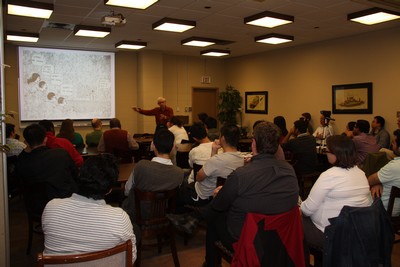
Scholarship Opportunity for Women in Engineering
The Section wishes to advise eligible members that scholarship opportunities for women in engineering are available from the Canadian Engineering Memorial Foundation. From their press release (English, French (DOC)):
In its continued tradition of recognizing leadership and excellence, the Canadian Engineering Memorial Foundation is proud to once again announce the launch of its annual scholarship program for women in engineering across the country.
Ten scholarships totaling $80,000 will be awarded to women studying engineering at the undergraduate, master’s and PhD level in 2013.
Five $5,000 CEMF Undergraduate Engineering Scholarships (one scholarship is awarded in the Atlantic, Québec, Ontario, Prairies and British Columbia regions) are available for undergraduates.
As well, for mining and metallurgical engineering students, global mining giant Vale — and a CEMF partner of over 20 years — has reaffirmed its commitment to a five-year scholarship and summer job program to run from 2012 to 2016. Through the CEMF Foundation, Vale is offering three $10,000 Vale Undergraduate Engineering Scholarships and one $10,000 Vale Master’s Engineering Scholarship. The scholarships are open to women interested in mining and metallurgical engineering (or a related field), and include a possible summer job opportunity with Vale — providing the winner with an excellent work opportunity.
“On behalf of all our scholarship recipients, past and future, CEMF thanks Vale for its continued dedication and support, including sponsoring all of CEMF’s 2012 winners to attend the 2012 awards luncheon in Niagara Falls this past summer,” says Huntley O’Connor, CEMF president. “We are extremely proud of our partnership with Vale.”
Finally, the Foundation continues to honour one incredibly accomplished woman in engineering with its prestigious $15,000 Claudette MacKay-Lassonde Scholarship. This scholarship is offered to a woman who is a leader in her community, is involved in research and teaching, is enrolled full-time in a graduate engineering program at the PhD level and, as with all CEMF scholarships, is dedicating her time and energy to promoting engineering as a career to young people.
Supporting diversity, encouraging leadership and making a tangible difference are the cornerstones of the CEMF scholarship program. Together with our scholarship partner Vale, we are committed to helping talented young women shape the future of our society.
All applications and criteria are available now online at www.cemf.ca. Deadline for applications is midnight, January 4, 2013 for Vale scholarships and midnight, January 11, 2013 for CEMF scholarships.
More information about the Canadian Engineering Memorial Foundation can be found at their website or in this fact sheet (PDF).
IEEE Day Lunch and Learn, Tuesday, 02 October 2012
Updated:January 13, 2013
In recognition of IEEE Day on Tuesday, October 2, 2012, Dr. Yuanzhu Chen of the Department of Computer Science will be giving a talk on Proactive Source Routing in Mobile Ad Hoc Networks. The talk will be held in the Engineering Faculty Lounge (EN4000) from 12:00--1:00 PM. A pizza lunch will be provided.
Proactive Source Routing in Mobile Ad Hoc Networks
A mobile ad hoc network (MANET) is a wireless communication network where nodes that are not within direct transmission range establish their communication via the help of other nodes to forward data. It can operate without a fixed infrastructure, support user mobility, and falls under the general scope of multi-hop wireless networking. Such a networking paradigm originated from the needs in battlefield communications, emergency operations, search and rescue, and disaster relief operations. Later, it found civilian applications such as community networks.
Innovative routing in mobile ad hoc networks is crucial for unleashing the full potential of such networks. In this presentation, we will present a new Proactive Source Routing (PSR) protocol that has a very small communication overhead but provides nodes with more network structure information than distance-vector based protocols. The value of the source routing protocol includes: 1) better control of path selection by the source nodes for congestion avoidance, load and energy consumption balancing, and bypassing untrusted areas, 2) alleviation of IP forwarding at intermediate nodes, and 3) support for opportunistic data forwarding. PSR complements DSR (Dynamic Source Reouting) as a proactive counterpart to provide responsive data transportation services in heavily loaded networks. The performance results show that PSR achieves performance similar to OLSR (Optimized Link State Routing) and DSDV (Destination Sequenced Distance Vector), but with only a small fraction of the communication overhead.
Full event details:
- Date: Tuesday, October 2, 2012
- Location: Faculty Lounge (EN4000), Engineering Building, Memorial University
- Time: 12:00 PM
- Food: A pizza lunch will be provided.
Update: The event was a great success and was very well-attended. Thanks to all involved.
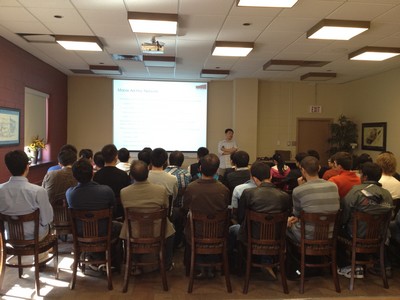
IEEE Canada History Committee Seeks Volunteers
The IEEE Canada History Committee wants to engage volunteers who have an interest in history as it relates to our fields of interest and have the capacity to contribute to the activities of the committee. If interested, please submit a note expressing your interest to Dave Kemp, IEEE Canada History Committee Chair, d.kemp at ieee.org.
Technical Talk: Dr. Ram Achar, "Meeting the Signal Integrity Challenges of High-Speed Circuit and Systems"
IEEE Newfoundland-Labrador Section and the Computer, Communication, and Circuits & Systems Joint Societies Chapter cordially invites you to an IEEE Circuits and Systems Society (CASS) Distinguished Lecture entitled Meeting the Signal Integrity Challenges of High-Speed Circuit and Systems by Dr. Ram Achar, Professor in the Department of Electronics at Carleton University. The talk will be presented on Monday, July 16, at 7:00 PM in EN-4000 (the Engineering Faculty Lounge) at Memorial University.
Prof. Achar is an active researcher contributing to the advancement of computer-aided design tools and methodologies for analysis of high-frequency circuits and systems. He has published over 170 peer-reviewed articles in international journals/conferences, six multimedia books on signal integrity and five chapters in different books.
Dr. Achar currently is a professor in the department of electronics engineering at Carleton University. Prior to joining Carleton university faculty (2000), he served in various capacities in leading research labs, including T. J. Watson Research Center, IBM, New York (1995), Larsen and Toubro Engineers Ltd., Mysore (1992), Central Electronics Engineering Research Institute, Pilani, India (1992) and Indian Institute of Science, Bangalore, India (1990). His research interests include signal/power integrity analysis, circuit simulation, parallel and numerical algorithms, EMC/EMI analysis, microwave/RF algorithms, modeling/simulation methodologies for sustainable and renewable energy, and mixed-domain analysis.
Dr. Achar received several prestigious awards, including Carleton university research achievement awards (2010 & 2004), NSERC (Natural Science and Engineering Research Council) doctoral medal (2000), University Medal for the outstanding doctoral work (1998), Strategic Microelectronics Corporation (SMC) Award (1997) and Canadian Microelectronics Corporation (CMC) Award (1996). He was also a co-recipient of the IEEE advanced packaging best transactions paper award (2007). His students have won numerous best student paper awards in international forums.
Dr. Achar currently is a Distinguished Lecturer (DLP) of the IEEE Circuits and Systems Society (CASS). Previously, he served as the general co-chair of IEEE international conference on Electrical Performance of Electronic Packages & Systems (EPEPS-2010,2011) and as International Guest Faculty on the invitation of the Dept. of Information Technology of Govt. of India, under the SMDP-II program. He also currently serves on the executive/steering/technical-program committees of several leading IEEE international conferences, such as EPEPS, EDAPS, ECTC, SPI, ASP-DAC etc. and in the technical committees, EDMS (TC-12 of CPMT) and CAD (MTT-1). He is a founding faculty member of the Canada-India Center of Excellence, a member of the Canadian standards committee on nanotechnology, chair of the joint chapters of CAS/EDS/SSC societies of the IEEE Ottawa Section, and is a consultant for several leading industries focused on high-frequency circuits, systems and tools. Dr. Achar is a practicing professional engineer of Ontario.
He received the B. Eng. degree in electronics engineering from Bangalore University, India in 1990, M. Eng. degree in micro-electronics from Birla Institute of Technology and Science, Pilani, India in 1992 and the Ph.D. degree from Carleton University in 1998.
For more details about Dr. Achar, his Research Activities/Contributions and Publications, Please visit: https://web.doe.carleton.ca/~achar/
Dr. Achar will be presenting on the following topic:
Meeting the Signal Integrity Challenges of High-Speed Circuit and Systems
The intense drive for signal integrity has been at the forefront of rapid and new development in CAD algorithms focused on high-speed circuits and systems. With increasing demands for high signal speeds coupled with decreasing feature sizes, interconnect effects such as signal delay, distortion and crosstalk become the dominant factors limiting the performance of high-speed systems. On the other hand, interconnect structures can be diverse and present at any of the hierarchical packaging levels including integrated circuits, printed circuit boards, multi-chip modules and backplanes. If not considered during the design stage, interconnect effects can cause failed designs. Since extra iterations in the design cycle are costly, accurate prediction of these effects is a necessity in high-speed designs. Although conventional CAD tools such as SPICE are used routinely by many engineers for simulation and general circuit analysis, these tools do not handle adequately the new emerging challenges of interconnect effects.
In this talk, high-frequency issues and signal integrity in high-speed designs will be discussed. Advanced signal integrity modeling/simulation strategies applicable to various levels of system hierarchy will be described. Also the underlying concepts leading to high-frequency effects, signal parameters and time-frequency relations will be reviewed. Particular emphasis will be placed on distributed, long and large coupled interconnects. Modeling approaches to handle high-frequency current distribution related effects, such as skin, proximity and edge effects will be considered. Particular emphasis will be placed on preserving the macromodel properties, such stability, causality and passivity. Various levels of interconnect modeling will be considered and the applications cover wide spectrum of on-chip, multichip, packages, printed circuit boards, backplanes/connectors.
Full event details:
- Date: Monday, July 16, 2012
- Location: Faculty Lounge (EN4000), Engineering Building, Memorial University
- Time: 7:00 PM
CANCELLED - Technical Talk: Dr. Prasad Gudem, "Recent Advancements in Cellular Receivers"
Please be advised that Friday's lecture by Dr. Gudem, "Recent Advancements in Cellular Receivers" has been CANCELLED due to a family emergency.
Dr. Prasad Gudem of Qualcomm Inc. will be delivering a technical talk entitled Recent Advancements in Cellular Receivers on Friday, June 29, 2012 at 11:00 AM in the Faculty of Engineering Boardroom.
Prasad Gudem received a Ph.D. degree from the University of Waterloo, Waterloo, Ontario, Canada in 1996 and a B.Tech. degree from the Indian Institute of Technology, Madras, India in 1988, both in Electrical Engineering. Prior to joining Qualcomm, he worked on device modeling for analog and RF applications at Cadence Design Systems and cellular transceiver design in SiGe at IBM Watson Research Center. He is currently a Senior Director of Engineering in the analog/RF IC group at Qualcomm, San Diego, California. Since joining Qualcomm in 2002, he led the development and commercialization of five generations of cellular transceivers. He has over 25 IEEE publications and over 50 patents. He taught several graduate-level classes and co- advised numerous Ph.D. students in the area of RFIC design at the University of California at San Diego, La Jolla, California. Dr. Gudem was the recipient of the Graduate Teaching Award for the 2001-2002 academic year in recognition of his outstanding teaching of the ECE265 course sequence “Communication Circuit Design: I, II, and III”.
Dr. Gudem will be presenting on the following topic:
Recent Advancements in Cellular Receivers
In this talk, we will briefly review the history of wireless receivers. The rest of the talk will focus on the evolution of cellular receivers for the past decade based on the author’s experience in leading five generations of commercial cellular transceiver chips. Cellular receivers need to meet stringent sensitivity and linearity requirements while keeping low power consumption required to extend battery life. In the first case study, we will discuss how diversity receiver was enabled in commercial phones to meet the market demand to increase data throughput without doubling power consumption. In the second case study, we will discuss how an inter-stage SAW filter was eliminated in commercial cellular phones without increasing power consumption. In the third case study, we will discuss how voltage scaling was employed in commercial phones to reduce power consumption of receivers to reach the much desired and anticipated milestone of 8 hour talk time. In the final case study, we will discuss an ever increasing data centric cellular market demand that needs to be met with innovations to support receiver carrier aggregation without increasing power consumption.
Full event details:
- Date: Friday, June 29, 2012
- Location: Main Boardroom (EN4002), Engineering Building, Memorial University
- Time: 11:00 AM
CANCELLED - IEEE Distinguished Lecturer: Dr. Fabrizio Granelli, “Networking and the Smart Grid”
Please be advised that Wednesday's lecture by Dr. Fabrizio Granelli, "Networking the Smart Grid" has been CANCELLED. His flight was unable to land in St. John's. Apologies for such short notice.
IEEE Newfoundland and Labrador Section in conjunction with the IEEE Communications Society is pleased to announce that Dr. Fabrizio Granelli, IEEE ComSoc Distinguished Lecturer for 2012-13, will be delivering a lecture in St. John’s on June 6, 2012.Fabrizio Granelli is Associate Professor at the Dept. of Information Engineering and Computer Science (DISI) of the University of Trento (Italy). From 2008, he is deputy head of the academic council in Information Engineering. He received the «Laurea» (M.Sc.) degree in Electronic Engineering from the University of Genoa, Italy, in 1997, with a thesis on video coding, awarded with the TELECOM Italy prize, and the Ph.D. in Telecommunications from the same university, in 2001. Since 2000 he is carrying on his research and didactical activities (currently Associate Professor in Telecommunications) at the Dept. of Information Engineering and Computer Science – University of Trento (Italy). He was coordinator of the Networking Laboratory in 2006-2010. In August 2004 and August 2010, he was visiting professor at the State University of Campinas (Brasil). He is author or co-author of more than 130 papers published in international journals, books and conferences. His main research activities are in the field of networking, with particular reference to performance modeling, cross-layering, wireless networks, cognitive radios and networks, green networking and smart grid communications.
Professor Granelli will be presenting on the following topic:
Networking and the Smart Grid: the relevance of communications in the future of power grid
The Smart Grid represents a clear step forward in improving power generation, distribution, consumption. Indeed, the Smart Grid is a digitally enabled electrical grid that gathers, distributes, and acts on information about the behavior of all participants (suppliers and consumers) in order to improve the efficiency, importance, reliability, economics, and sustainability of electricity services.
In this scenario, communications gain a central point as a key enabling technology in supporting the “intelligence” of the system. Nevertheless, the area of communications and associated knowledge can even play a greater role, in supporting modeling, simulation and design of the next generation power grid.
The seminar aims at providing an overview of the concept and architecture of the Smart Grid, focusing on the contributions of the communications community in terms of communications infrastructure and methodologies. Sample scenarios will be presented to illustrate the relevance of communications in the power grid.
Full event details:
- Date: June 6, 2012
- Location: Faculty Lounge, Engineering Building, Memorial University
- Time: 6:45 for 7:00 PM
Please spread the word and bring a colleague!
IEEE Spring 2012 Newsletter
The IEEE Newfoundland-Labrador Section Spring 2012 Newsletter is now available online at https://ewh.ieee.org/r7/newfoundland_labrador/newsletter-spring-2012.php.
Annual IEEE Lobster Boil
Saturday, June 2, 2012, 6:30 for 7pm
The Fluvarium
Tickets only $25 each for IEEE members and one guest; non-members $35 each. Please specify lobster, steak or vegetarian dinner at time of ticket purchase. Salads, rolls, dessert, tea, coffee and a drink ticket included! Catered by the Fluvarium.
Deadline for tickets: noon, Wednesday, May 30th
For tickets, contact Brian Kidney at bkidney@ieee.org or any member of the IEEE Newfoundland & Labrador Section Executive.
IEEE Student Night
Monday, March 26, 2012, 7pm-10pm
Memorial University's Engineering Building, Room: EN-4000
On Monday, March 26, 2012 at 7pm, the Faculty of Engineering at Memorial is holding its annual "IEEE Student Night". This event is an opportunity for graduating engineering students to present and demonstrate their senior design projects. The evening will begin at 7pm sharp in the Engineering Faculty Lounge (room EN4000) in the Engineering Building at Memorial and will begin with three project presentations as chosen by classmates and instructors.
Following the presentations, there will be an opportunity to see demonstrations of all projects. Finally, the evening will conclude with the presentation of awards and consuming of pizza and drinks.
Any interested parties are encouraged to attend the evening. Students certainly will appreciate an opportunity to show to their future colleagues, the accomplishments of their final year projects. Parking has been arranged for Area 16, next to the University Centre.
If you have any questions about the event, please contact Robert Collett at robert.collett at gmail.com.
Radar Vision: An Evening With Two Local Leaders in Radar Research and Revelopment
Thursday, February 2, 2012, 19:00 hours
Engineering Boardroom (EN 4002), Engineering and Applied Science Building, Memorial University
The IEEE - Oceanic Engineering Society and Marine Technology Society - Newfoundland and Labrador Section are pleased to present Radar Vision, an evening with two local leaders in radar research and development:
- Mr. Joe Ryan, President, Delta Radar Inc.
- Mr. Ryan will give an overview of his work as a leader in the development of radar technology for marine navigation and surveillance over the past three decades, including research and product development and commercialization efforts in advanced radar signal processing and HF surface wave radar. He will also discuss recent advances in radar hardware technology including Software Defined functionality that will provide new product development and research opportunities. Multi-mode radar offers the potential to bring vision-like capabilities to radar and extend its usefulness in the fields of navigation in ice, ocean parameter measurement and small target detection.
- Ms. Madlena Hakobyan, PhD candidate, C-CORE
- Ms. Hakobyan will describe her work in using ground based synthetic aperture radarfor monitoring motion and deformation, with a particular emphasis on monitoring changes to coastlines and coastal infrastructure.
For additional information, or to register, please contact either Randy Gillespie (randy.gillespie@mi.mun.ca) or Ralf Bachmayer (Bachmayer@mun.ca)
Annual General Meeting, OES Chapter AGM, and Technical Talk
Monday, December 5, 2011, 7pm-9pm
EN 4002 (Main Boardroom), Engineering and Applied Science, Memorial University
The IEEE Newfoundland-Labrador Section would like to invite you to its Annual General Meeting, this coming Monday, December 5th at 7pm. The agenda includes:
- A brief review of 2011 Section highlights, and an outline for plans for 2012 events and activities
- Report and business arising from the Oceanic Engineering Society Chapter
- A talk by MUN's Sailbot team. MUN Sailbot is a student-driven effort to design and build a low cost 2-m robotic sailboat for entry into international competition in 2011 (Annapolis, Maryland) and 2012 (Vancouver, British Colombia). Come listen to Jordan Smith and others speak about the team's challenges and triumphs!
An informal wine and cheese reception will follow the meeting.
Technical Talk - Outlook and Challenges in Electrostatic Discharge (ESD) Protection of Modern and Future Integrated Circuits
Wednesday, November 30th, 2011, 2:15pm
EN 4002 (Main Boardroom), Engineering and Applied Science, Memorial University
Speaker
Juin J. Liou, Pegasus Distinguished Professor, University of Central Florida, Orlando, Florida, USA, Chang Jiang, Scholar Endowed Professor, Ministry of Education, China Feng Chia Chair Professor, Feng Chia University, Taiwan, Fellow of IEEE, Fellow of IET, Fellow of SIMTech
Abstract
Electrostatic discharge (ESD) is one of the most prevalent threats to electronic components. It is an event in which a finite amount of charge is transferred from one object (i.e., human body) to the other (i.e., microchip). This process can result in a very high current passing through the microchip within a very short period of time, and more than 35% of chip damages can be attributed to such an event. As such, designing on-chip ESD structures to protect microchips against the ESD stress is a high priority in the semiconductor industry. The continuing scaling of CMOS technology makes the ESD-induced failures even more prominent, and one can predict with certainty that the availability of effective and robust ESD protection solutions will become a critical and essential component to the successful advancement and commercialization of the next-generation CMOS technology.
An overview on the ESD sources, models, protection schemes, and testing will first be given in this talk. This is followed by the discussions of the challenges for designing and realizing ESD protection solutions in modern and next-generation integrated circuits.
Biography
Biography of Juin J. Liou: Juin J. Liou received the B.S. (honors), M.S., and Ph.D. degrees in electrical engineering from the University of Florida, Gainesville, in 1982, 1983, and 1987, respectively. In 1987, he joined the Department of Electrical and Computer Engineering at the University of Central Florida (UCF), Orlando, Florida where he is now the Pegasus Distinguished Professor and UCF-Analog Devices Fellow. His current research interests are Micro/nanoelectronics computer-aided design, RF device modeling and simulation, and electrostatic discharge (ESD) protection design and simulation.
Dr. Liou holds 7 U.S. patents (1 more filed and pending), and has published 9 books, more than 240 journal papers (including 16 invited articles), and more than 190 papers (including 78 keynote or invited papers) in international and national conference proceedings. He has been awarded more than $10.0 million of research contracts and grants from federal agencies (i.e., NSF, DARPA, Navy, Air Force, NASA, NIST), state government, and industry (i.e., Semiconductor Research Corp., Intel Corp., Intersil Corp., Lucent Technologies, Alcatel Space, Conexant Systems, Texas Instruments, Fairchild Semiconductor, National Semiconductor, Analog Devices, RF Micro Device, Lockheed Martin), and has held consulting positions with research laboratories and companies in the United States, China, Japan, Taiwan, and Singapore. In addition, Dr. Liou has served as a technical reviewer for various journals and publishers, general chair or technical program chair for a large number of international conferences, regional editor (in USA, Canada and South America) of the Microelectronics Reliability journal, and guest editor of 3 special issues in Microelectronics Reliability and Solid-State Electronics.
Dr. Liou received ten different awards on excellence in teaching and research from the University of Central Florida (UCF) and six different awards from the IEEE. Among them, he was awarded the UCF Pegasus Distinguished Professor (2009) – the highest honor bestowed to a faculty member at UCF, UCF Distinguished Researcher Award (four times: 1992, 1998, 2002, 2009) – the most of any faculty in the history of UCF, UCF Research Incentive Award (three times: 2000, 2005, 2010), UCF Trustee Chair Professor (2002), and IEEE Joseph M. Biedenbach Outstanding Engineering Educator Award in 2004 for his exemplary teaching, research, and international collaboration. His other honors are Fellow of IEEE, Fellow of IET, Fellow of Singapore Institute of Manufacturing Technology, Fellow of UCF-Analog Devices, Distinguished Lecturer of IEEE Electron Device Society (EDS), and Distinguished Lecturer of National Science Council. He holds several honorary professorships, including Chang Jiang Scholar Endowed Professor of Ministry of Education, China – the highest honorary professorship in China, NSVL Distinguished Professor of National Semiconductor Corp., USA, Chang Gung Endowed Professor of Chang Gung University, Taiwan, Feng Chia Chair Professor of Feng Chia University, Taiwan, Chunhui Eminent Scholar of Peking University, China, Cao Guang-Biao Endowed Professor of Zhejiang University, China, Honorary Professor of Xidian University, China, Consultant Professor of Huazhong University of Science and Technology, China, and Courtesy Professor of Shanghai Jiao Tong University, China. Dr. Liou was a recipient of U.S. Air Force Fellowship Award and National University Singapore Fellowship Award.
Dr. Liou has served as the IEEE EDS Vice-President of Regions/Chapters, IEEE EDS Treasurer, IEEE EDS Finance Committee Chair, Member of IEEE EDS Board of Governors, and Member of IEEE EDS Educational Activities Committee.
Nominations for 2012-2013 Executive
Our Nominations Committee has compiled a list of candidates for the 2012-2013 executive. In accordance with our bylaws members have 14 days to nominate alternate candidates by petition.
The slate of nominees is as follows:
- Chair: Cheng Li (automatic ascension from Vice Chair)
- Vice Chair: Brian Kidney
- Treasurer: Geoff Holden
- Secretary: Andrew Cook
Technical Talk - Spectrum Sensing with Incomplete Channel Information
Tuesday, September 13th, 2011, 5:00pm - 6:00pm
EN 4002 (Main Boardroom), Engineering and Applied Science, Memorial University
Speaker
Claudio R. C. M. da Silva, Assistant Professor in the Bradley Department of Electrical and Computer Engineering, Virginia Tech
Abstract
Dynamic spectrum access is a new concept that offers the potential for more efficient use of the radio spectrum and improved spectrum sharing. In such systems, users first identify idle or underutilized spectrum with the use of spectrum sensing and/or white space databases and then, following pre-defined rules, dynamically access the "best" frequency bands on an opportunistic and non-interfering basis. In this talk, we address one important issue yet to be overcome in order to bring sensing-based dynamic spectrum access to reality, which is the design of spectrum sensing algorithms for realistic propagation environments. First, we present the design of methods for the detection and classification of communication signals when the channel state is unknown. We then discuss spectrum sensing in the presence of man-made and natural noise.
Biography
Claudio R. C. M. da Silva is an Assistant Professor in the Bradley Department of Electrical and Computer Engineering at Virginia Tech. His current primary research interests are opportunistic spectrum access and cognitive communications, including single-radio and cooperative spectrum sensing, coexistence of heterogeneous wireless systems, and the scalability of cognitive networks. He received the B. S. and M. S. from the State University of Campinas, Brazil, in 1999 and 2001, respectively, and the Ph.D. from the University of California, San Diego in 2005, all in electrical engineering.
Dr. da Silva received the best student paper award at the 2003 IEEE Conference on Ultra-Wide Band Systems and Technologies, and was a California Institute of Telecommunications and Information Technology (Calit2) graduate student fellow for the 2001-2002 academic year. He spent the summer of 2004 with the Corporate Technology Group of Intel Corp. Dr. da Silva is a Senior Member of the IEEE and has served on the technical program committee of numerous IEEE conferences in the communications area.
NECEC 2011 Call for Papers
NECEC 2011 is fast approaching. The call for papers is out (PDF available here) and abstracts are due by September 12th.
For more information, please visit https://necec.engr.mun.ca.
Technical Talk: Advances on Bearingless Motor Drives
Tuesday, August 2nd, 2011, 11:00 am
Memorial University's Engineering Building, Faculty Lounge, Room: EN-4000
Speaker
Dr. Akira Chiba, FIEEE, Professor of Electrical Engineering Tokyo Institute of Technology
Abstract
Recent research and development of bearingless motors are presented. Bearingless motor is a combined electric motor with magnetic bearing functions. The first prototype was successfully suspended at MUN in 1990 when the presenter was a postdoctoral fellow. The recent developments are involved with wide gap and compact structures. In the presentation, a project on a wide gap bearingless motor with full 5-axis active suspension is presented. In addition, a novel winding structure of a middle point current injection type bearingless motor is presented. Some other bearingless motors are also introduced.
This presentation focuses on how to use a combination of rapid prototyping, Customer Development Cycles and Lean Start-up principles to quickly iterate through ideas, define your customers, collect their feedback and build the minimum product that they will pay for. It also discusses important concepts such as sticking to very slim vertical markets, providing whole experiences, and the Smoke Test Landing page.
Biography
Akira Chiba (IEEE S'82-M'88-SM'97-F'07) was born in Tokyo, Japan in 1960. He received the B.S., M.S., and Ph.D. degrees in electrical engineering from the Tokyo Institute of Technology, Tokyo, Japan, in 1983, 1985 and 1988, respectively. In 1988, he was a Research Associate at the Department of Electrical Engineering, Faculty of Science and Technology, Tokyo University of Science, Tokyo. From 1992 to 1993, he was a Research Lecturer; from 1993 to 1997, a Senior Lecturer; from 1997 to 2004, an Associate Professor; and from 2004 to 2010, a Professor. Since 2010, he has been a Professor in the Department of Electrical and Electronic Engineering, Graduate School of Science and Engineering, Tokyo Institute of Technology. From 1990 to 1991, he was a Postdoctoral Fellow of the Natural Science and Engineering Research Council of Canada at Memorial University of Newfoundland, Canada. He has been studying magnetically suspended bearingless ac motors, super high-speed motor drives, and HEV and EV motors. He is the author or co-author of more than 720 papers including the first book on "magnetic bearings and bearingless drives" in 2005; and he has 56 patents including submitted ones so far.
Technical Talk: Michael Winter, Cambrai Solultions
Friday, July 29th, 2011, 3:15 pm
Memorial University's Engineering Building, Faculty Lounge, Room: EN-4000
On Friday, July 29th, 2011, the IEEE Newfoundland-Labrador Section Computer, Communication, and Circuits & Systems Joint Societies Chapter is co-sponsoring a talk with the Memorial University Computer Engineering Research Lab (CERL). Mr. Michael Winter will speak about his own experiences as an entrepreneur and will share knowledge about how to start a company. All IEEE members are invited to attend.
Biography
Michael Winter graduated from MUN Computer Engineering in 2008. Throughout Michael's six years in MUN he became passionate about entrepreneurship and using technical skills to bring new ideas to market. After graduating Michael joined the St. John's based start-up Virtual Marine Technology and led the development of their small boat equipment simulator. Then in October 2009 Michael and two other MUN engineering students were recruited by Canadian entrepreneur Sir Terry Matthews to join his Ottawa based Wesley Clover incubator and start Cambrai Solutions. With Wesley Clover's guidance Cambrai made their first sale 6 months after founding and have since deployed their software in the UK, US, and Australia.
Abstract
Most start-ups fail because of a lack of customers, not a failure of product development. Traditionally entrepreneurs developed an idea, a business plan, a product, then hopefully sold it to customers. But my mentors have taught me how that plan is entirely backwards. Start with the customers first, then build a product for them.
This presentation focuses on how to use a combination of rapid prototyping, Customer Development Cycles and Lean Start-up principles to quickly iterate through ideas, define your customers, collect their feedback and build the minimum product that they will pay for. It also discusses important concepts such as sticking to very slim vertical markets, providing whole experiences, and the Smoke Test Landing page.
Lobster Boil
Friday, June 24, 2010, 6:30 for 7pm
The Fluvarium
Tickets only $20 each for IEEE members and one guest; non-members $30 each. Please specify lobster, steak or vegetarian dinner at time of ticket purchase. Salads, rolls, dessert, tea, coffee and 2 drink tickets included! Catered by the Fluvarium.
Deadline for tickets: noon, Monday, June 20th
For tickets, contact any member of the IEEE Newfoundland & Labrador Section Executive.
Technical Talk: Dr. Hai Jiang - Cooperative Wireless Multicast
Tuesday, April 26, 2011 at 2:30pm
Memorial University's Engineering Building, Room: EN-4002
Cooperative Wireless Multicast : Cooperation Strategy and Incentive Mechanism
Speaker: Dr. Hai Jiang, Assistant Professor
Dept. of Electrical and Computer Engineering
University of Alberta, Canada
Abstract:
Multicast is a bandwidth efficient mechanism to provide wireless services for a group of nodes. Providing reliable wireless multicast is challenging due to channel fading. This work investigates cooperation among receiving nodes to enhance the reliability of wireless multicast. A time division based cooperative multicast strategy is proposed, and the optimal scheduling scheme is found to maximize the system throughput. It is shown that the optimal relay number is bounded by a threshold, and the optimal time allocation can be found using an efficient algorithm. Numerical results show that the proposed strategy can enhance network performance when the average channel condition between receiving nodes is better than that of the direct link. To provide incentive for cooperation, this work further studies the interactions among selfish nodes using a game theoretical approach. The cooperative multicast process is modelled as a repeated game and the desired cooperation state which satisfies absolute fairness and Pareto optimality is found. A Worst Behaviour Tit-for-Tat incentive strategy is designed to enforce cooperation and its effectiveness is studied under both the perfect and the imperfect monitoring scenarios. To address the issue of imperfect monitoring, an interval based estimation method is proposed. Simulation results show that the proposed strategy can enforce cooperation efficiently even the monitoring is imperfect.
Speaker Bio:
HAI JIANG received the B.S. degree in 1995 and the M.S. degree in 1998, both in electronics engineering, from Peking University, China and the Ph.D. degree in 2006 in electrical engineering from the University of Waterloo, Canada. Since July 2007, he has been an Assistant Professor at the Department of Electrical and Computer Engineering, University of Alberta, Canada. His research interests include radio resource management, cognitive radio networking, and cross-layer design for wireless multimedia communications. He received an Alberta Ingenuity New Faculty Award in 2008 and a Best Paper Award from IEEE GLOBECOM 2008. He served as a Co-Chair for the General Symposium at the International Wireless Communications and Mobile Computing Conference (IWCMC) 2007, the Communications and Networking Symposium at the Canadian Conference on Electrical and Computer Engineering (CCECE) 2009, and the Wireless and Mobile Networking Symposium at the IEEE International Conference on Communications (ICC) 2010.
IEEE Student Night
Friday, April 1, 2011, 7pm-10pm
Memorial University's Engineering Building, Room: EN-4002
On Friday, April 1, 2011 at 7pm, the Faculty of Engineering at Memorial is holding its annual "IEEE Student Night". This event is an opportunity for graduating engineering students to present and demonstrate their senior design projects. The evening will begin at 7pm sharp in the Engineering Boardroom (room EN4002) in the Engineering Building at Memorial and will begin with three project presentations as chosen by classmates and instructors.
Following the presentations, there will be an opportunity to see demonstrations of all projects. Finally, the evening will conclude with the presentation of awards and consuming of pizza and drinks.
Any interested parties are encouraged to attend the evening. Students certainly will appreciate an opportunity to show to their future colleagues, the accomplishments of their final year projects.
If you have any questions about the event, please contact Dr. Dennis Peters at dpeters at engr.mun.ca.
