 |
Southern New Jersey Professional Societies
|
Combined business meetings of the Southern New Jersey professional societies
When: Generally held on the third or fourth Wednedsay of the month from September through May at 6:30 pm
Heaven or HAL: Human/Machine Compatibility in the Age of Machine Learning
Speaker: Brian Hilburn, Ph.D., Center for Human Performance Research, Netherlands
Would you accept a machine that appears to think exactly like you? Could you ever trust a computer to make deep, strategic decisions, such as your next dinner menu item? Or vacation destination? Or spouse? From the court room to the air traffic control room, computers are increasingly capable of performing the ‘thinking’ part of many jobs. Advances in Artificial Intelligence (AI) are forcing us to start considering fundamental questions regarding how advanced automation should be designed (should it mimic the human? Need it even be understandable to the human?), and how such automation might impact the human (with respect to trust, acceptance, usage, etc). This talk will review the author’s empirical research in this area, including review of three ongoing European Union research programs.
Pilot Evaluation of Proposed Go-around Criteria for Transport Category Aircraft
Speaker: Dr. Angela Campbell, Aerospace Engineer, FAA NextGen Aviation Research, System Safety Section
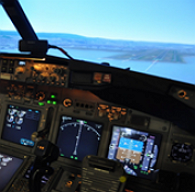 Wave-off, wave-off!!! Although commercial aviation has an outstanding safety record, the rate of
accidents on approach and landing continues to be substantially higher than other phases of flight. One
contributing factor is unstable approaches continuing to landing. Consequently, a Flight Safety Foundation study
concluded after studying 16 years of runway excursion accidents that 85% of those accidents could have been
avoided by conducting a go-around. Nonetheless, compliance with stabilized approach criteria continues to be
poor. In fact, approximately 3% of approaches are unstable and only about 3% result in a go-around. To address
this issue, a four year research project was conducted to identify the key factors that drive noncompliance with
stabilized approach criteria and to develop revised go-around criteria with the intent of increasing compliance
and improving safety. Dr. Campbell's presentation will cover an overview of the existing go-around decision
making criteria, her experiments in analyzing the factors preventing positive go-around executions with
human-in-the-loop simulations, and resulting recommendations for updated procedures that can be used to improve
air-traffic safety!
Wave-off, wave-off!!! Although commercial aviation has an outstanding safety record, the rate of
accidents on approach and landing continues to be substantially higher than other phases of flight. One
contributing factor is unstable approaches continuing to landing. Consequently, a Flight Safety Foundation study
concluded after studying 16 years of runway excursion accidents that 85% of those accidents could have been
avoided by conducting a go-around. Nonetheless, compliance with stabilized approach criteria continues to be
poor. In fact, approximately 3% of approaches are unstable and only about 3% result in a go-around. To address
this issue, a four year research project was conducted to identify the key factors that drive noncompliance with
stabilized approach criteria and to develop revised go-around criteria with the intent of increasing compliance
and improving safety. Dr. Campbell's presentation will cover an overview of the existing go-around decision
making criteria, her experiments in analyzing the factors preventing positive go-around executions with
human-in-the-loop simulations, and resulting recommendations for updated procedures that can be used to improve
air-traffic safety!
Wednesday Sept 18, 2019
National Oceanic and Atmospheric Administration (NOAA) Joint Polar Satellite System (JPSS)
The JPSS Suomi National Polar-orbiting Partnership (S-NPP), NOAA-20, and the Global Change Observation Mission-Water (GCOM-W1) Satellites generate global environmental products that are available to domestic and international operational users and climate communities. These products provide mission continuity from legacy National Oceanic Atmospheric Administration (NOAA), National Aeronautics and Space Administration (NASA), and the Department of Defense (DoD) Polar-orbiting Operational Environmental Satellite capabilities. The sensor suite on the S-NPP and NOAA-20 is made up of these instruments: the Advanced Technology Microwave Sounder (ATMS), the Cross-track Infrared Sounder (CrIS), the Ozone Mapping and Profiler Suite (OMPS), the Visible Infrared Imaging Radiometer Suite (VIIRS), and the Clouds and the Earth’s Radiant Energy System (CERES).
The JPSS Proving Ground and Risk Reduction (PGRR) program facilitates initiatives to increase or improve the use and value of JPSS data products in user products, services, and application or service areas. The aviation initiative was created as a solution to the need for satellite products in the aviation community and is focused on establishing and building relationships with pilots and forecasters. The initiative has been demonstrating JPSS/VIIRS cloud products to the pilots and forecasters in Alaska. It is also investigating the value of quantitative products to the pilots and forecasters, determining how polar satellite data improves diagnosis and forecast of aviation hazards, and highlighting experimental products for future applications. This talk will begin with an overview of the JPSS overview and as well as explore the current and future activities of the Aviation Initiative and provide interim results from the latest demonstration.
Wednesday May 15, 2019
Weather, the State of Long Term Forecasting, and the Last Winter Frost
Weather research at Stockton University is conducted using the Weather Research and Forecasting (WRF) model maintained by the National Center for Atmospheric Research (NCAR). The most recent project involves tomato plants, specifically problems with tomato plants in the community gardens in Philadelphia. It is suspected that the problems could have something to do with the urban heat island effect experienced by moderate to large cities. There are two aspect to this project. The first is to record the atmospheric variables near ground layer and investigate the urban heat island effect. The second is to test tomato plants that are bred for cooler temperatures and have shorter growing seasons. This will require an accurate prediction of the last spring frost. This talk will cover an introduction to this climate project, and introduction to Numerical modeling of the atmosphere, and he difficulty in long term and climate predictions.
Wednesday April 17, 2019
Airport Applications of Unmanned Aircraft Systems (UAS)
The continuous evolution of Unmanned Aircraft Systems (UAS) has stimulated interest among airport operators for various airfield applications. Today’s UAS are autonomous enough to execute complex flight patterns with minimal input from remote pilots and boast safety features including automatic return functionality and collision-avoidance. High-resolution cameras and other advanced sensors provide real-time data at heights, distances, and angles never before possible. In cooperation with the FAA Office of Airports, the FAA’s Airport Technology Research and Develop Branch (ATR) is working to enable the reliable, safe, and effective integration of UAS into the airport environment. The FAA Office of Airports has identified five core safety-related applications for UAS in the airport environment: Obstruction Analysis, Airfield Pavement Inspections, Wildlife Hazard Management, Perimeter Security, and Aircraft Rescue and Firefighting. Together with other industry leaders in UAS integration (airports, agencies, and organizations), ATR is developing concepts of operation (CONOPS) that identify suitable technology for each of these core applications and affect FAA-authorized guidance resources. Methods and means for all applications will continue to be gathered and refined through outreach efforts including expert focus groups. This presentation will provide an update on the achievements and research activities conducted in Fiscal Year (FY) 2018, as well as an overview of activities planned for FY 2019.
Wednesday March 20, 2019
EPICS and GLOBE Labs Project
The IEEE “EPICS and GLOBE Labs (EAGL)” project was funded by IEEE in 2018. Along with Co-Principal Investigator Brian Hagerty, the project seeks to develop a global presence as both a Geoscience and Remote Sensing Laboratory and fulfil the goals and objectives of IEEE’s Engineering Projects In Community Service (EPICS) Program. The two IEEE members have come up with a way to provide hands-on activities to teach science and engineering. Members John Moore and Brian Hagerty teamed up with EPICS in IEEE and NASA’s Global Learning and Observations to Benefit the Environment (GLOBE) program to establish the EPICS and GLOBE Lab (EAGL). The EAGL is designed to use supercomputers that will analyze data collected from satellites. The Institute for Earth Observations is an educational endeavor to engage STEM teachers and students to study the planet using state-of-the-art technologies and resources. This presentation will focus on current progress and future goals.
Wednesday Sept 19, 2018
Analyzing Pilot Decision-Making Using Predictive Modeling
Due to the increased availability of computational power and large amounts of data, predictive modeling and analytics are becoming increasingly popular in a wide variety of fields. Some predictive modeling techniques are fairly simple, such as linear and logistic regressions, whereas others are fairly complex, such as artificial neural networks. Popular applications of predictive modeling include detecting fraud, diagnosing patients for certain diseases, and predicting traffic and travel times. This presentation discusses one novel application of predictive modeling in the field of commercial aviation safety research. First, two different predictive modeling techniques are presented: artificial neural networks (ANNs) and partition models. The application of the techniques is then demonstrated through a case study related to the determination of stable approach/go-around criteria for transport category aircraft. Predictive modeling is used to analyze human-in-the-loop flight simulator data and questionnaire responses by a number of commercial pilots in order to predict their go- around decisions based on a set of given initial conditions. Through these analyses, it was found that individual pilot personalities significantly affect go-around decision-making. In addition, comparisons are made between modeling methods, and the benefits of using such techniques in modeling human behavior to improve aviation safety is demonstrated.
Wednesday May 16, 2018
Women in Aviation & Aerospace
 The first woman to obtain a pilot’s license
achieved that milestone 108 years ago. Yet
today, despite women being 51% of the
population in the U.S., they are only 6% of
licensed pilots, 13% of aerospace engineers, and
2% of aircraft mechanics. Learn about the
history and future of women in aviation and
aerospace from Jill Meyers, pilot and aerospace
engineer. Ms Meyers will also talk about the
non-profit organization Dreams Soar and how
she supported Shaesta Waiz’ historic solo flight
around the world to inspire the next generation
of Science, Technology, Engineering and Math
(STEM) and aviation professionals.
The first woman to obtain a pilot’s license
achieved that milestone 108 years ago. Yet
today, despite women being 51% of the
population in the U.S., they are only 6% of
licensed pilots, 13% of aerospace engineers, and
2% of aircraft mechanics. Learn about the
history and future of women in aviation and
aerospace from Jill Meyers, pilot and aerospace
engineer. Ms Meyers will also talk about the
non-profit organization Dreams Soar and how
she supported Shaesta Waiz’ historic solo flight
around the world to inspire the next generation
of Science, Technology, Engineering and Math
(STEM) and aviation professionals.
Wednesday April 18, 2018
The Next Generation Transportation Data Analytics Cluster
The transportation system is transitioning from technology driven system to a data driven system. While, it is expected that the existing and evolving technologies in the transportation engineering will produce significant data, the researchers are still in the initial phase of converting this data into meaningful information. For any system, there are three primary steps that convert data into meaningful information; (1) Data collection/generation, (2) Data analysis, and (3) Data interpretation. This presentation will include (1) a unique mobile data collection system being developed by Rowan Smart Vehicle Research Group that can provide location specific data to any regional Transportation Systems Management & Operations (TSM&O) center; (2) a framework for core algorithms for the next generation transportation data analytics cluster (TransDAC); and (3) an example of data interpretation.

Wednesday January 17, 2018
The Air Traffic Conflict Probe and Future with NextGen’s Trajectory Based Operations (TBO)
The primary function of air traffic control in the National Airspace System is to safely manage air traffic operations by ensuring aircraft always maintain a safe distance between each other. This is often referred to as the separation management function and performed strategically in both the Center and TRACON environments. To support separation management, the Conflict Probe (CP) function is an automation controller tool that is used primarily in the en route Centers and more tactically in the TRACONs to assist in the prediction of a future loss of separation between aircraft. In today’s en route automation (ERAM), CP uses a trajectory modeler to predict future aircraft positions to approximately a 20-minute time horizon. The performance of the trajectory modeler has a direct impact on the false and missed alert rate of the CP. In the next few years, implementation of NextGen’s Trajectory Based Operations (TBO) will require significant improvement in the performance of the trajectory modeler and thus the CP allowing the human air traffic controllers to utilize the tool much more effectively. The presentation will describe how the CP works, its evaluation and performance, and illustrate how its improvements for TBO can be achieved.
Wednesday October 18, 2017
Army Cyber Institute (ACI) Overview and Current Initiatives
ACI is a national strategic initiatives group for cyber issues affecting the Army. Its broad national charter is to conduct outreach among the Army, government, academia, public and private sector at the tactical, operational, and strategic levels. Reporting directly to the Superintendent of the United States Military Academy (USMA) at West Point, the ACI develops intellectual capital with subject matter experts to expand the cyber knowledge base for Army defense and operations. This cyber focus will help the nation to outmaneuver its adversaries in cyberspace and bridge gaps to promote information exchange across the Army, government, academia, public and private sector. The ACI is a national resource for research, advice, and education in the cyber domain, engaging military, government, academic, and industrial cyber communities in impactful partnerships to build intellectual capital and expand the knowledge base for the purpose of enabling effective Army cyber defense and cyber operations.
Wednesday Sept 20, 2017
Deep Learning vs. Bayesian Thinking Application to Image Segmentation
Biomedical image analysis and segmentation is challenging because of the unpredictable appearance and shape of tumors from multi-modal imaging data. In this talk, we investigate two approaches: Mathematical modeling and optimization vs. deep learning; more specifically, partial differential equations vs. convolutional neural networks. Mathematically, we propose a deformable model based on the variational level set method (LSM) and non-negative matrix factorization (NMF). We describe the use of NMF, an algorithm based on decomposition by parts that can reduce the dimension of images from thousands of pixels to a handful of regions. Coupled with the variational framework, NMF-LSM is a powerful image segmentation method with pixel-level accuracy. In the second approach, we propose an automatic segmentation method based on Convolutional Neural Networks (CNNs) with a deep architecture. The two approaches are validated on the Multimodel Brain Tumor Segmentation Challenge (BRATS) 2016 database. We use the Dice Similarly coefficient and Haussdorff measure to assess the three tumor regions: whole tumor, core tumor and necrosis. NMF-LSM showed superior performance for whole tumor and necrosis in Hausdorff measure, whereas CNN showed superior performance for the tumor core in Dice metric. In our ongoing efforts, we are integrating both approaches towards a complete clinic-ready suite of MR analysis and display tools, named coordinates and volumetrics for brain tumors.
Wednesday June 28, 2017
Potential Impact and Details of Privatizing the Air Traffic Control System in the United States
In 2016, the US Congress developed and later sidelined H.R.4441 or the Aviation Innovation, Reform, and Reauthorization Act (AIRR) that required the Department of Transportation to spin off the Federal Aviation Administration’s (FAA) administered air traffic control system into a separate, private, and non-profit entity. AIRR would have impacted the bulk of the personal at the W.J. Hughes Technical Center including those that are in the Air Traffic Organization and NextGen lines of business. Now in 2017, a major effort is afoot to re-introduce the bill with renewed support from a consortium of congressional sponsors, airlines excluding Delta Airlines, the National Air Traffic Controllers Association (NATCA), and the current administration. If implemented under this renewed effort, the potential effect not only to the National Airspace System but to our local Technical Center’s personnel will likely have significant long term consequences.
The FAA Managers Association (FAAMA) is a national not-for-profit organization with a mission to promote aviation safety and efficiency while advocating for FAA managers’ interests. At the request of SNJPS leadership and to help stimulate awareness of our members and guests, the FAAMA shall present details on the renewed effort to privatize the FAA and its potential impact to our local community in southern New Jersey.
Wednesday May 17, 2017
CubeSat—Platform for Low-Cost Evaluation of Space Technology and Systems Engineering
The MemSat, the first academic CubeSat from New Jersey, is a nanosatellite set to launch in Q2 2018 as a part of the NASA sponsored ELaNa 23 program. MemSat aims at investigating future space technology that can significantly advance mission capabilities, extend opportunities for future space activities, and improve cost-benefits. MemSat will experimentally evaluate functionalities of emerging memristor memory systems over the standard silicon-based ones in the space environment. Compared to existing memory systems such as DRAM and Flash memory, resistive memory—memristor—is expected to exhibit superior performance in terms of manufacturing cost, energy consumption, storage density, access speed, among many others. In particular, the memristor technology holds the promising potential to provide increased resilience to radiation, and thus robustness against Single Event Upset (SEU). All of which make memristor technology an appealing alternative to conventional memory technologies, to support deep-space exploration missions that require many years of operation and massive storage to record data. This talk also addresses how Rowan is utilizing the CubeSat development project as an experiential education platform for systems-on-a-system integration.
Wednesday April 19, 2017
NAS Storyboarding and the Benefits of Cultivating a Knowledge Community
Communities of Practice are groups of people who share a passion about a topic and deepen their knowledge and expertise by interacting frequently. Although the definition of a Community of Practice has changed overtime, the idea that effective knowledge creation is socially created and presented as shared stories has yielded big payoffs to communities and organizations that embrace it. From eBay to Chrysler Auto, organizations that embrace these types of knowledge communities have benefitted from the increase in aggregate knowledge. The Animated Storyboards for the National Airspace System is a platform that can facilitate a knowledge community for the FAA and NextGen Systems by putting less emphasis on traditional documentation and more focus on meaningful interactions with subject matter experts and users, thereby creating an intuitive learning product fueled by a highly collaborative environment.
Wednesday March 15, 2017
Continuous Monitoring Techniques for Detecting Emergent Behavior in the US National Airspace System
Test and evaluation (T & E) practices for complex System-of-Systems (SoS) have evolved over time to cope with the scale and scope of these systems, but reliable methods for detecting emergent behavior have remained elusive. It’s a reasonable assumption that the US National Airspace System (NAS) has never been in the exact same state more than once in the last 30 years of operation. Recognizing the large number of known unknowns and the unknown unknowns that accompany any major change to a SoS, a great deal of Operational T & E is conducted on NAS systems before they are certified and deployed. The advantages of integrating T & E earlier into the system development lifecycle are well documented, and by extending T & E practices and principles into full lifecycle monitoring, an effective methodology for detecting emergent behaviors can be developed.
Wednesday Feb 15, 2017
Risk Mitigation – From Space Applications to the Internet-of-Things (IoT)
Systems include many risks, which occupy the efforts of the people who must identify and manage those risks in order to mitigate them to acceptable levels to support missions and safeguard lives. This talk summarizes a number of inter-related projects that all contribute in some measure to risk management. Beginning with NASA’s Max Launch Abort System project, which was designed to mitigate launch pad failure risks, the role of smart/intelligent sensors is considered, and then concludes with the importance of standardization to reduction of risks in the era of IoT.
Wednesday Jan 18, 2017
Sleep, Circadian Rhythms and Cognitive Performance on a Human Mission to Mars
The timeframe of a manned mission to Mars is well beyond the duration astronauts and cosmonauts have remained confined in either a spacecraft or space analog environment. Long-duration exploration missions are characterized by high crew autonomy and prolonged periods of isolation and confinement. Behavioral health risks are among the most serious unmitigated risks of such missions, and there is a critical need to predict the time course, magnitude, and individual variability in behavioral and affective reactions of space explorers. The presentation will focus on sleep, circadian rhythms and cognitive performance in 24 astronauts during 6-month International Space Station (ISS) missions, and on individual differences in behavioral and psychological reactions of a multinational, culturally diverse, all-male crew of 6 who were participating in the first ground-based, high-fidelity simulated 520-day mission to Mars.
Meeting archives: